LATEST EPISODE:
Loading...
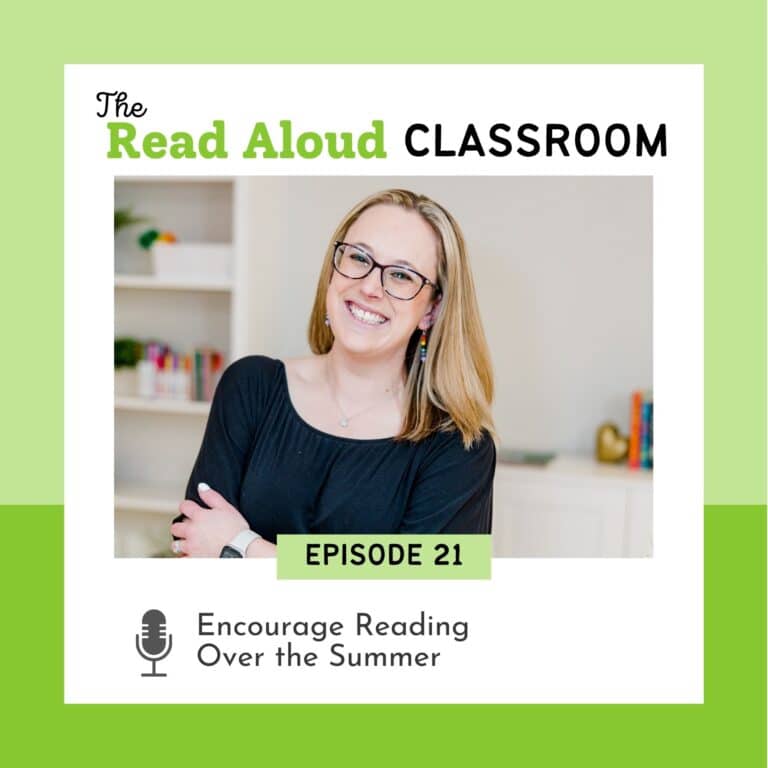
Episode 21

Reading Over the Summer?

Listen below or find the show on:

Are you worried about your students losing their reading momentum during those long summer months? In this episode, I’ll show you how to transform summer reading from a dreaded academic chore into an exciting adventure that keeps the read-aloud magic alive when school’s out! I share practical strategies for setting students up for reading success before they leave your classroom, plus creative ideas families will actually use (reading picnics, anyone?).

I dive into ways you can maintain connections with students about books over summer, celebrate their reading accomplishments when school resumes, and even nurture your own reading life. Plus, I introduce my comprehensive Summer Reading Challenge resource that makes implementation easy. You’ll walk away with actionable ideas to help your students maintain not just their reading skills, but more importantly, their love of stories all summer long!
Links & Resources:

Introduction

Welcome to The Read Aloud Classroom, where we’re making picture books work for you even with a packed schedule. I’m Sara, and I’m so glad you’re joining me today!

You know, one of my favorite memories from teaching was when Sophia—one of my former second graders—came rushing up to me in the hallway on the first day back from summer break. She was bursting with excitement to tell me about all the books she’d read over summer vacation. Her mom later shared that Sophia had actually improved her reading skills during those months away from school. And the best part? Sophia had fun doing it!

Now, I know many of us worry about that dreaded “summer slide” when our students leave our classrooms for those summer months. But today, I want to talk about something different—not reading as an academic concern, but reading as a joy that can continue long after the classroom door closes for summer. Because the magic of read alouds you’ve created all year doesn’t have to stop just because school does.

Summer Reading Challenge Resource

Before we dive in, I want to let you know about my Summer Reading Challenge resource that’s available on my website. So many teachers have found this helpful! One teacher wrote, “My students selected their reading challenge, and this resource was the winner. That speaks volumes about the resource.” Another shared, “I just finished making these packets for my students. There are so many ideas for them to encourage reading this summer.”

The Summer Reading Challenge includes everything you need: booklet covers, reading goals sheets, summer reading logs, Bingo boards, reading challenge checklists, a reading minutes tracker, summer reading calendars, and a reading journal. I’ve designed it to be fun and motivating, not another chore for students or their families. You can find it at thecolorfulapple.com/summer, and I’ll drop that link in the show notes as well.

Why Summer Reading Matters (But Not in the Way You Think)

Let’s talk about why summer reading matters—and not just for the reasons we typically hear about. Yes, we know that continuing to read helps maintain skills, but I actually think there’s something more important happening.

During the school year, you’ve worked so hard to create meaningful read aloud experiences. Your students have fallen in love with stories, developed connections with characters, and experienced that magical feeling of being transported to another world through books. Summer reading is about keeping that magic alive, but without the pressure of curriculum goals or assessment requirements.

I know so many of you have shared your struggles with finding time for read alouds during the packed school day. You’ve worked tirelessly to make each minute count. Summer offers something different—a chance for students to discover reading on their own terms, at their own pace, and according to their own interests.

When kids read during summer, they’re developing so much more than just reading skills. They’re feeding their imagination, building family bonds if they’re reading with loved ones, and discovering their own unique reading identity. What kinds of books do they love when they get to choose freely? What stories call to them when there’s no assignment attached?

And if you’re looking for some summer-themed books to recommend, think about titles that celebrate the season—books about beach adventures, camping trips, gardening, or summer sports. These seasonal connections can make reading feel relevant to what they’re experiencing.


Setting Students Up for Summer Reading Success

Before your students leave for summer break, I highly recommend having a dedicated conversation about summer reading. Make it exciting! Talk it up like it’s a special opportunity, not a homework assignment.

When introducing the Summer Reading Challenge, focus on choice and personalization. Let students select which components they want to use. Some might love the Bingo boards, while others prefer the reading logs or challenge checklists. Having that choice immediately makes it more engaging.

Help students identify their reading interests before they leave. Maybe have a quick conference with each student to brainstorm a personal summer reading list, or create a class chart of “Books We Can’t Wait to Read This Summer.” Remind them that summer is the perfect time to explore new genres or authors they’ve been curious about.

It’s also essential to address the reality that students have different access to books. Emphasize that comic books, magazines, recipes, even game instructions—all of these count as reading! And be sure to give explicit permission to abandon books they don’t enjoy. Nothing kills reading motivation faster than feeling stuck with a book that isn’t working for you.

When I use the Summer Reading Challenge with students, I love showing them how to set realistic reading goals. Maybe it’s reading for 15 minutes three times a week, or finishing five books by August, or trying three new genres. The key is making these goals personalized and achievable.

The Bingo boards in the resource are particularly popular because they turn reading into a game. Challenges like “Read under a tree” or “Read while eating ice cream” make reading feel like an adventure rather than an assignment.

And those reading logs? Position them as a celebration tool, not a verification form. “This is going to be so fun to look at in September and remember all the amazing books you discovered!”


Creative Ideas for Families to Make Reading Fun

Now, let’s talk about some creative ideas you can share with families to make summer reading fun:

Reading picnics are a huge hit with kids! Suggest packing a favorite snack, a blanket, and a stack of books and heading to the park. There’s something magical about reading outdoors that creates lasting memories.

Libraries are absolute treasures during summer. Beyond just free books, most libraries offer incredible summer programming. They host reading challenges with prizes, arts and crafts sessions, storytimes, and special events like visiting magicians or performers. Make sure your students know that most of these programs are completely free!

For families taking road trips, audiobooks can transform travel time into story time. Many libraries now offer digital audiobook borrowing, making this accessible for most families.

At home, creating special reading spaces can make reading feel like a treat. Building a blanket fort specifically for reading adventures or designating a cozy corner with pillows and good lighting can make reading time something to look forward to.

Reading-themed movie nights are another fun idea—read the book, then watch the movie adaptation and discuss the differences.

For students who might have limited adult support at home, suggest reading to younger siblings, pets, or even stuffed animals. There’s something powerful about reading aloud, even when the audience may not respond!

And encourage reading in unusual places! On a swing, in a treehouse, at the pool (safely away from the water, of course), or by flashlight under the covers. Changing the setting can make familiar books feel new again.

Staying Connected Over the Summer

One way to maintain momentum is by staying connected with your students over the summer. There are several approaches you might try:

If you use a class blog, keep it active with your own summer reading updates and invite students to comment about what they’re reading. Google Classroom can serve a similar purpose if your school keeps it open over the summer.

A more traditional approach is having students send postcards to the school about books they’re reading. These can be displayed when school resumes in the fall.

Email check-ins about exciting book discoveries can be another way to maintain that connection. Even a simple monthly email asking “What’s everyone reading this month?” can keep the conversation going.

When planning for fall, consider organizing a back-to-school book celebration. Schedule informal book talks over lunch during the first week back, create a display of summer reading accomplishments, or invite students to reconnect with you or their previous teachers to share their reading journeys.

I love creating a “Would I Recommend This Book?” rating chart when students return, where they can place sticky notes on a scale to help classmates discover great summer reads.

Teachers’ Reading Lives Matter Too!

Before we wrap up, I want to talk directly to you, teacher to teacher. Your reading life matters too! Summer offers you a rare opportunity to reconnect with reading for pleasure.

Bring a book to the beach or pool. Read something just because it looks interesting, not because it’s for professional development or classroom use. Rediscover the joy of getting lost in a story without thinking about how you might teach it.

This isn’t just self-care (though it certainly is that!)—it’s also modeling. When you return in the fall with genuine enthusiasm about books you’ve loved, that excitement is contagious. Your students will sense your authentic connection to reading, and it will reinforce everything you’ve been teaching them about the joy of books.

This is your chance to rekindle your own reading joy so you can bring that enthusiasm back in the fall!

Recap and Action Steps

So let’s recap what we’ve covered today:

  • Summer reading should be about joy, not obligation
  • The reading habits and love of stories you’ve cultivated all year can continue through summer
  • Making reading fun, social, and connected to summer activities increases engagement
  • Libraries offer tremendous free resources for summer reading
  • Staying connected with students about reading maintains momentum
  • And your own reading life deserves attention too!

Here’s one action step I’d love for you to take this week: Schedule a dedicated class meeting before the end of the year focused entirely on summer reading excitement. Use this time to introduce the Summer Reading Challenge, help students identify their reading interests, and brainstorm creative ways they might incorporate reading into their summer fun.

Then, consider sending home the challenge with personalized notes or goals for each student. And if possible, connect with your local libraries to get their summer programming schedules to share with families.

Closing Call to Action

If you try any of these ideas with your students, I’d love to hear about it! Take a screenshot of this episode, share it on Instagram, and tag me @thecolorfulapple to let me know which strategy you’re most excited to try. And don’t forget to grab your Summer Reading Challenge resource at thecolorfulapple.com/summer.

Thanks for joining me today in the Read Aloud Classroom. If you found value in this episode, I’d be grateful if you’d subscribe and leave a positive five-star review. This helps spread the word to other teachers just like you.

Come connect with me on Instagram @thecolorfulapple and find all the links and resources mentioned today at thecolorfulapple.com. I can’t wait to see you next week in the Read Aloud Classroom!


Summer Books

  • A Beach Tail by Karen Lynn Williams
      1. A Beach Tail is such a sweet story, told from the point of view of the child. 
      2. Gregory and his dad are headed to the beach. 
      3. Greg draws a lion in the sand and his dad tells him not to leave “Sandy.” 
      4. So he gives his lion a realllyyy long tail! A Beach Tail showcases the excitement and allure of the beach. 
      5. It’s about discovery and getting lost in imagination. 
      6. The sound effects and repetition make it a great read aloud for the classroom!
  • Summer Song by Kevin Henkes
      1. Summer Song captures the essence of summer with lyrical text and images. 
      2. This picture book describes the sounds and colors of the season. It brings the magic of summer alive! 
      3. This beautiful ode to summer is part of a series of books that each highlight one of the four seasons.
  • Jabari Jumps by Gaia Cornwall
      1. Jabari Jumps is one of my all-time favorite books! 
      2. It’s summertime at the pool and Jabari wants to jump off the high-dive. 
      3. He finished his lessons and passed his swim test, so he’s ready! 
      4. But first he needs to decide what kind of dive he wants to do…and do some stretches… 
      5. Maybe Jabari was a little more nervous than he thought. 
      6. His dad helps him see that it is okay to be scared of something new. 
      7. A great read aloud about being brave and overcoming your fears!
  • Summertime Sleepers by Melissa Stewart
      1. We all know that animals hibernate, but did you know that some estivate? 
      2. Summertime Sleepers is a brand new non-fiction book about animals that sleep for long periods of time in the summer. 
      3. The dual layers of text in this book gives reasons why animals become dormant in the warmer weather. 
      4. The elegant, watercolor illustration give the book a scrapbook feel. 
      5. It even gives additional information in the back matter of the book.
  • Hello Ocean by Pam Munoz Ryan
    1. Hello Ocean is a feast for the senses! 
    2. It shares everything that you see, feel, hear, smell and taste at the beach. 
    3. Readers will be fully immersed in the seaside. 
    4. The vibrant illustrations and poetic text bring the beach to life.

Never Miss An Episode!

Subscribe to get new episodes sent right to your inbox

Or follow The Read Aloud Classroom on your favorite podcast app

welcome to

The Read Aloud Classroom

The Read Aloud Classroom podcast delivers practical strategies to help elementary teachers transform their daily read alouds into engaging learning moments that spark student engagement while meeting curriculum requirements.