Intro
Hey there, teacher friends! Welcome to The Read Aloud Classroom, where we’re making picture books work for you, even with a packed schedule. I’m Sarah, and I’m so glad you’re joining me today.
So, can I share something with you? Something that teachers don’t often admit? We’re not all naturally confident with read alouds. I know, shocking, right?
I remember this one time in my classroom, I was so excited about this beautiful picture book. I read the whole thing to my students, totally caught up in the story. And when I closed that book, I suddenly realized – I hadn’t stopped ONCE to ask a single question about the lesson I was supposed to be teaching! I was just so into the book that I completely forgot! Has that ever happened to you?
Or how about flipping a page and thinking, “Oh shoot, should I have asked a question back there?” Or “Am I reading too fast?” I’m from New England, and we tend to talk pretty fast up here. I’ve literally had students raise their hands and say, “Ms. Sarah, can you please slow down?” Talk about a reality check! [laughs]
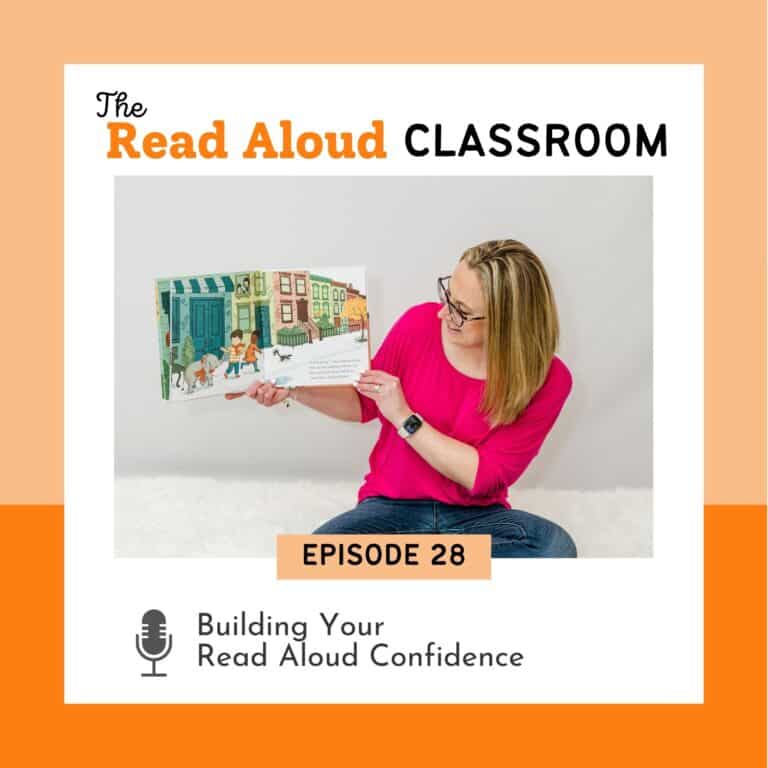
Today, we’re diving into something so many teachers struggle with but rarely talk about – building confidence during interactive read alouds. We’ll tackle the big three: asking the right questions, mastering your pacing, and yes, even how to physically hold the book (which is weirdly challenging sometimes!).
Because here’s the truth – you don’t have to be a perfectly polished performer to give your students amazing read aloud experiences. You just need a few strategies and a little self-compassion.
First Call to Action
Before we dive in, I’d love to hear YOUR read aloud confidence journey! Hop on Instagram and share your experiences using #ReadAloudReality and tag me @thecolorfulapple. I promise you’re not alone in whatever you’re feeling.
Talking Point 1: The Questioning Confidence Crisis
Let’s start with what I hear from teachers ALL the time – questioning anxiety. You know what I’m talking about: “Am I asking the right questions? Am I stopping at the right moments? Am I asking too many questions? Not enough?”
In fact, I recently surveyed thousands of teachers about their read aloud struggles, and here’s what some of them said:
One teacher wrote: “I struggle with coming up with questions on the spot.”
Another shared: “Sometimes I stop too often throughout the story to ask questions and students lose focus.”
And my personal favorite that I totally relate to: “I feel like I get so involved while reading aloud I don’t stop enough so I can hear students’ thoughts throughout the read aloud. Most of my sharing is at the end.”
Sound familiar? [pause] I thought so!
Here’s the thing – strategic questioning isn’t just about checking comprehension. It’s about teaching students how to think about stories, how to make connections, and how to engage with text in meaningful ways. But finding that sweet spot can feel like trying to nail jelly to a wall sometimes!
So let me share some practical questioning strategies that have really helped me and the teachers I work with:
First, start small. For any read aloud, just aim for 3-5 really good, pre-planned questions. That’s it! Don’t overwhelm yourself thinking you need to stop every other page.
Next – and this is my absolute favorite trick – use sticky notes! Write your questions on colorful sticky notes and place them directly on the pages where you want to stop. This way, you’re not trying to remember questions or flipping back and forth between your lesson plan and the book.
Now, what kind of questions should you ask? I like to use question stems that work across multiple books. Things like:
- “What do you notice about…?”
- “How might the character feel when…?”
- “What do you think will happen next because…?”
- “How does this remind you of…?”
These types of open-ended questions work for almost any picture book and get kids thinking beyond just yes or no answers.
And don’t forget to aim for some higher-order thinking questions! Remember Bloom’s Taxonomy from teacher school? [laughs] Try to move beyond just “What color was the dog?” to questions like “Why do you think the author chose to have the character make that decision?”
The key is balance – mix some literal questions with those deeper thinking ones to engage all your learners.
Talking Point 2: Mastering Read Aloud Pacing
Now let’s talk about pacing – which is basically the rhythm of your read aloud. Too fast and kids miss important details. Too slow and they’re climbing the walls. It’s like the Goldilocks of teaching skills!
Like I mentioned, I’m naturally a fast talker. When I get excited about a book (which is pretty much always), I tend to speed up without realizing it. Maybe you do too, or maybe you have the opposite challenge.
One of the biggest pacing dilemmas teachers face is finding that balance between maintaining the flow of the story and stopping for meaningful discussion. You don’t want to interrupt so much that kids lose the thread of the narrative, but saving ALL your questions for the end? That doesn’t work either because by then, those early details are long gone from their working memory.
Here are some practical pacing strategies I’ve found helpful:
Always, always preview the book first. I know we’re all busy and sometimes you’re grabbing that book five minutes before the kids come in from recess, but even a quick flip-through helps you identify the natural stopping points in the story.
When you find those key moments that serve your teaching objective, limit yourself to stopping just at those points. For most picture books, that means about 3-4 minutes of reading between stops, which feels just about right for most elementary students.
I’ve also learned to use visual scanning while I read. You know, that teacher superpower where you’re reading the words but also simultaneously checking to see if your students are still with you? [laughs] If you see confusion or excitement bubbling up, that might be a natural place to pause, even if it’s not on your sticky note plan.
One technique that’s been a game-changer for me is creating a simple “pause” gesture that signals to students it’s thinking time. I hold up my hand like this [describe gesture] and it gives everyone – including me – a moment to process before diving into discussion.
And if you’re a fast talker like me? Practice reading slower than feels natural. I literally had to record myself and play it back to realize how fast I was going! It felt SO weird to slow down at first, but it made such a difference for my students.
Talking Point 3: Book Handling Confidence
Okay, let’s talk about something that seems so basic but can actually be really tricky – physically handling the book during a read aloud. I know it sounds silly, but I can’t tell you how many teachers have told me they feel awkward holding books while trying to read and show pictures at the same time.
One teacher wrote to me: “It may seem silly, but I only struggle with holding the book.”
Another said: “Deciding if I should read page then show pictures, or hold book with pictures out and try to read from top of book.”
These are real concerns! And they matter because how you handle the book affects both your ability to read fluently and your students’ ability to stay engaged with the story.
So here are some practical book handling strategies:
Instead of holding the book directly in front of you (which blocks your face and connection with students), try holding it slightly to your side. This way, you can glance down to read but still maintain eye contact with your class.
For those bigger picture books that feel like you’re wrestling an octopus [laughs], try sitting down and resting the bottom edge on your lap. This gives you stability and keeps your arms from getting tired halfway through.
One trick that took me years to master was turning pages smoothly with one hand while holding the book with the other. It feels a bit like patting your head and rubbing your tummy at first, but once you get it, it makes such a difference in your flow!
When it comes to showing illustrations, develop a consistent rhythm: read the text, then turn the book to show the picture. Let students know this is your pattern so they aren’t constantly trying to peek around the book while you’re reading.
And for larger classes, don’t be afraid to use technology! A document camera can be amazing for ensuring everyone can see the illustrations clearly while still maintaining that intimate read aloud experience.
The most important thing to remember is that different books may require different handling techniques. Sometimes the illustrations are crucial to understanding the story, and other times they’re more supplementary. Let the book guide how you share it.
Talking Point 4: Building Lasting Read Aloud Confidence
So we’ve talked about questioning, pacing, and book handling – but how do we pull all this together to build lasting confidence with read alouds?
First, remember that confidence comes from three things: preparation, practice, and permission to be imperfect.
Preparation means doing that book preview, placing your sticky notes, and having a clear purpose for your read aloud.
Practice doesn’t mean you need to rehearse in front of your mirror (though you certainly can!). It just means that the more read alouds you do, the more comfortable you’ll become. Every teacher I know who prioritizes daily read alouds says it gets easier and more natural over time.
And giving yourself permission to be imperfect? That might be the most important one of all. Your students don’t need a Broadway-worthy performance. They need your authenticity and your enthusiasm for stories.
In fact, I’ve found that student engagement actually increases when teachers model learning moments. Like when you stumble over a tricky word and say, “Wow, that’s a challenging one! Let me try that again.” You’re showing them that reading is a process, not a performance.
If you’re just starting to build your confidence, here are some incremental steps that can help:
Begin with shorter read alouds and gradually increase the length as you get more comfortable.
Create consistent opening and closing rituals for read aloud time. Something as simple as a special read aloud song or chant can signal to both you and your students that it’s story time, creating a familiar structure that feels safe.
Consider recording yourself reading – just audio is fine if video feels too intimidating! Listening back helps you identify areas for growth that you might not notice in the moment.
And if possible, practice with a trusted colleague or even family member before students. My poor husband has sat through countless picture books as I figured out my questioning strategy! [laughs]
Above all, remember that your enthusiasm for the book matters more than perfect delivery. Kids are way more engaged by a teacher who genuinely loves a story than one who executes a flawless but passionless read aloud.
Recap
So, let’s pull all this together:
Questioning confidence comes from preparation and strategic planning – those sticky notes are going to be your best friends!
Pacing mastery develops with practice and being attentive to student feedback – sometimes they’ll literally tell you to slow down like mine did!
Book handling becomes natural with consistent techniques that work for you and your specific classroom setup.
And overall confidence grows when you give yourself permission to learn and improve over time.
Remember, your students would rather have an imperfect read aloud than no read aloud at all!
Action Steps
Before we wrap up, here are five simple action steps you can take this week to start building your read aloud confidence:
- Choose one familiar picture book that you already love and identify 3-5 strategic stopping points.
- Write quality questions on sticky notes and place them directly in the book – color code them if you want to get fancy! Yellow for literal questions, pink for inferential, green for connections – whatever system makes sense to you.
- Practice reading aloud with deliberate pacing. Maybe even time yourself to see how long you typically read between questions.
- Try different book holding positions to find what feels most comfortable for both you and allows students to see the illustrations.
- Start a “Read Aloud Reflection Journal” – nothing fancy, just jot down what worked well and what you might adjust next time after each read aloud session.
End of Episode Call to Action
If planning quality questions and finding the perfect stopping points feels overwhelming – I totally get it. Teaching is already demanding enough without having to reinvent the wheel for every read aloud.
That’s exactly why I created the Colorful Apple Book Club. We provide complete read aloud lesson plans with pre-selected books, strategic questions, and perfectly placed sticky notes—all designed to build your confidence while saving you precious time. You’ll know you have the right book for teaching specific skills, that your questions hit different levels of thinking, and that your pacing will keep students engaged.
Visit thecolorfulapple.com/bookclub to learn more. The link is in the show notes!
Next week, we’ll be talking about managing those wiggly students during read alouds. You know the ones! [laughs] Make sure you’re subscribed so you don’t miss it!
Thanks for joining me today in the Read Aloud Classroom. If you found value in this episode, I’d be grateful if you’d subscribe and leave a positive review. This helps spread the word to other teachers just like you.
Come connect with me on Instagram @thecolorfulapple and find all the links and resources mentioned today at thecolorfulapple.com.
I can’t wait to see you next week in the Read Aloud Classroom!