Welcome to the Read Aloud Classroom where we’re making picture books work for you even with a packed schedule. Hi, I’m Sarah, an educator who believes in the power of read alouds to transform your teaching without adding to our already full plates.
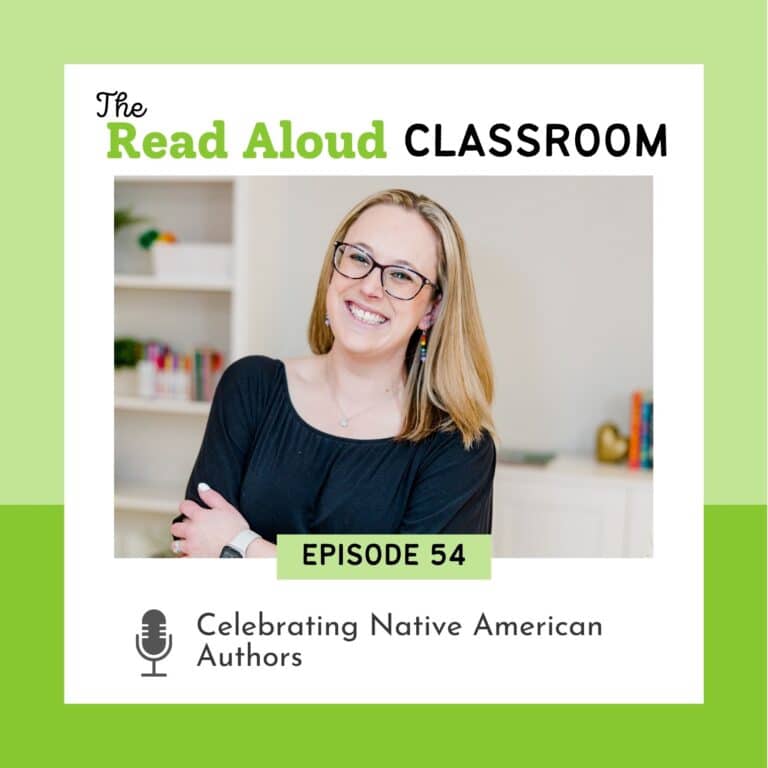
Today, I’m so excited to talk about something that’s really important to me—celebrating Native American authors and illustrators in our classrooms. And here’s the thing: this isn’t just a November conversation. Yes, November often brings Thanksgiving units to our classrooms, but Indigenous voices deserve to be heard and celebrated all year long.
You know, I think many of us grew up with a pretty limited view of Native American culture—maybe just that sanitized Thanksgiving story we learned in elementary school. But the truth is, there are 574 federally recognized Native American tribes within the United States, each with their own unique cultures, languages, and traditions. And Indigenous Americans live and exist in our communities every single day of the year, not just in November.
So today, I want to share some absolutely beautiful picture books written by Native American authors that you can share with your students any time. These books help all our students see beyond that narrow Euro-centric viewpoint, and for Native American children, seeing themselves represented positively in literature is incredibly empowering.
Change really can begin on your bookshelf, friends. So let’s dive into these amazing books!
First up, we have “We Are Water Protectors” by Carole Lindstrom, illustrated by Michaela Goade. This one is absolutely stunning—it’s both a New York Times bestseller and a Caldecott Medal winner, which tells you right there that it’s something special.
This book honors Indigenous-led movements across the world and issues an urgent rallying cry to safeguard the Earth’s water. The story follows a young water protector who takes a stand when a black snake—representing oil pipelines—threatens to destroy the Earth and poison her people’s water.
The language is so powerful: “Water is the first medicine. It affects and connects us all.” I love how this book teaches environmental activism through an Indigenous lens and shows students that even young people can stand up to protect what’s sacred. The illustrations by Michaela Goade are absolutely breathtaking too—they really bring the message to life.
Next, let’s talk about “Fry Bread: A Native American Family Story” by Kevin Noble Maillard, illustrated by Juana Martinez-Neal. This book is told in such lively, powerful verse, and it celebrates fry bread as so much more than just food.
The book shows us that fry bread is time—bringing families together for meals and new memories. It’s nation—shared by many from coast to coast. And ultimately, it’s us—a celebration of old and new, traditional and modern, similarity and difference.
What I really appreciate about this book is how it depicts a modern Native American family in such a vibrant, joyful way. It’s not stuck in the past—it shows Indigenous culture as living and thriving today. Plus, who doesn’t love a good food book? Your students will definitely be asking questions about fry bread after this one!
“We Are Still Here! Native American Truths Everyone Should Know” by Traci Sorell is perfect for your slightly older elementary students—think ages seven to ten. This is more of a nonfiction picture book, and it’s incredibly important.
Twelve Native American kids present historical and contemporary laws, policies, struggles, and victories in Native life, each with that powerful refrain: “We are still here!” The book covers topics like assimilation, allotment, termination, relocation, economic development, language revival, and sovereign resurgence.
Too often, Native American history is treated as a finished chapter instead of something relevant and ongoing. This book really opens up those conversations and helps students understand that Indigenous peoples have a past, a present, AND a future. Traci Sorell has a background in Native rights advocacy, and you can really feel that passion and expertise in her writing.
Now, here’s one that celebrates gender self-expression and identity through an Indigenous lens—”Raven’s Ribbons” by Tasha Spillett, illustrated by Daniel Ramirez.
Raven loves Round Dances—the drums, the music, the people dancing. But his favorite part is watching the ribbon skirts swirling like a rainbow. He wishes he could have a ribbon skirt of his own, but his grandmother has never seen a boy wearing one. The beautiful part of this story is when Raven’s grandmother realizes that even someone who has lived a long time can see wonderful things they’ve never seen before.
If you loved “Julián is a Mermaid,” you’re going to love this one too. It’s such a moving intergenerational story about how even within our traditions, there’s room for beautiful reinvention. It celebrates identity and self-expression while honoring cultural traditions—what a gift for our students!
Hey, before we continue with more amazing books, I want to tell you about something that might just save your weekends. You know those Sunday nights when you’re scrambling to find the perfect read-aloud for Monday morning? Or those Saturday mornings spent hunting for books and creating activities from scratch?
That’s exactly why I created Book of the Week—your Friday dose of read-aloud magic, delivered straight to your inbox! Every week, I share one carefully chosen book—usually a brand new release—that your students will absolutely love, along with a complete teaching guide. You get the book summary, key concepts, skills you can teach, and discussion ideas, all ready to go.
Think of it as having that trusted teacher-friend who just tells you exactly what book to read and how to teach with it. Your students are waiting for these amazing stories, and your weekends are waiting for you to reclaim them! You can sign up at thecolorfulapple.com, and the link will be in the show notes. Trust me, your Sunday evenings will thank you!
Okay, back to our wonderful books! Let’s talk about “The Gift of the Great Buffalo” by Carole Lindstrom—yes, the same author as “We Are Water Protectors”—illustrated by Aly McKnight.
This book offers the true history of life on the prairie, and I love how it reframes the familiar “little house on the prairie” narrative. As the book says: “Before there was a little house on the prairie, there was a tipi on the prairie.”
The story follows Rose, a young Métis-Ojibwe girl who has traveled far with her family for the biannual buffalo hunt. This ritual has been practiced for generations, and each hunt must see the community through the next six months. But the buffalo population has dwindled, and after days of hunting, there are no buffalo to be found. Can Rose help her family find the herd that will enable them to survive the long winter?
This book is so beautiful and dramatic, and it really shows students how life was lived by Indigenous communities. It’s a great counterpoint to the typical pioneer narratives we often see in schools.
“I Hope” by Monique Gray Smith, illustrated by Gabrielle Grimard, is such a tender, touching book. It’s about all the hopes adults have for the young people in their lives.
Using simple but powerful statements, the book delivers a message about loving, nurturing, and wishing the best for our children. The illustrations are warm and enchanting, and honestly, this one might make you a little misty-eyed!
What makes this book extra special is that it’s bilingual—it includes full text in both English and Plains Cree. This is a beautiful way to introduce your students to an Indigenous language and show them that these languages are living and being used today. This would be perfect for discussions about family traditions, hopes and dreams, or even as a mentor text for students to write their own “I hope” statements.
Now let’s talk about “Bowwow Powwow” by Brenda J. Child, with a companion retelling in Ojibwe by Gordon Jourdain and illustrations by Jonathan Thunder. This one is absolutely delightful!
Windy Girl has a vivid imagination—don’t we all know students like that? She gathers stories from her uncle about long-ago traditions, about dances and sharing and gratitude. Windy tells stories too, about her dog Itchy Boy and the way he dances to request a treat and wriggles with joy in response to, well, just about everything.
When Windy Girl, Uncle, and Itchy Boy attend a powwow, Windy watches the dancers in their jingle dresses and listens to the singers. She eats tasty food and joins family and friends around the campfire. Later, falling asleep under the stars, she dreams up something magical: a bowwow powwow, where all the dancers are dogs!
In her dream, she sees veterans in a Grand Entry, a visiting drum group, and traditional dancers, grass dancers, and jingle-dress dancers—all with telltale ears and paws and tails. All celebrating in song and dance.
This playful story is brought to life with vibrant dreamscape illustrations, and the fact that it includes an Ojibwe retelling makes it even more special. Your students are going to love this imaginative take on powwow celebrations!
Let’s talk about “Finding My Dance” by Ria Thundercloud. This is a true story, which makes it even more powerful.
Professional Indigenous dancer Ria Thundercloud tells the story of her path to dance and how it helped her take pride in her Native American heritage. At four years old, Ria was brought into the powwow circle, ready to dance in the special jingle dress her mother made for her. As she grew up, she danced with her brothers all over Indian country.
Then Ria learned more dance styles—tap, jazz, ballet—but she still loved the expressiveness of Indigenous dance the most. Despite feeling different as one of the only Native American kids in her school, she always knew she could turn to dance to cheer herself up.
This book follows Ria’s dance journey from dreaming of her future to performing as a professional, and the illustrations beautifully depict her graceful movements. It’s such an inspiring story about finding your passion, staying connected to your culture, and being proud of who you are.
And last but absolutely not least, we have “Bud Finds Her Gift” by Robin Wall Kimmerer, illustrated by Naoko Stoop. If you’ve read “Braiding Sweetgrass”—and if you haven’t, put it on your list!—you know that Robin Wall Kimmerer is a #1 New York Times bestselling author and a renowned Indigenous ecologist. This is her first picture book, and it’s absolutely beautiful.
When young Bud sees people bustling around, intent on their chores and their screens, she’s certain they must be doing important things—and she wants to be included. But her wise grandmother, Nokomis, shows her that there’s a different way to find belonging, one that relies on stillness and observing the natural world.
As Bud discovers the freely given gifts of the Earth, she begins to wonder: What is her gift? What does she have to give back?
This book is infused with such warmth, humor, and insight. The illustrations by Naoko Stoop are gorgeous and really capture that sense of wonder in nature. I love how this book inspires students to treasure nature’s generosity and think about the gifts each one of us can share with the Earth. It’s perfect for discussions about gratitude, reciprocity, and our relationship with the natural world—and those are conversations we need to be having with our students!
And there you have it—nine incredible picture books by Native American authors that deserve a place on your classroom bookshelf all year round! From environmental activism to cultural celebrations, from identity and self-expression to historical truths, these books offer such rich, important perspectives for all our students.
Remember, investing in quality picture books about Native Americans affects not just your students, but the lives of others too. It’s like a ripple in a pond. When we share books by Indigenous American authors all year round, we watch those ripples grow.
For Native American children, seeing themselves represented positively empowers them and gives them self-confidence. And for all students, these books help counteract that white Euro-centric viewpoint and prepare them to act with empathy for others.
So I encourage you—don’t wait until November. Pick up one of these beautiful books this week and share it with your students. Let’s celebrate Indigenous voices and stories every single day.
All of these titles will be listed in the show notes, so you can easily find them to add to your classroom library. I’d love to hear which ones you try with your students—drop me a message on Instagram @thecolorfulapple and let me know how it goes!
If you found today’s episode helpful, I’d be so grateful if you’d subscribe to the podcast and leave a positive review. This helps other teachers find our little community here in the Read Aloud Classroom.
And don’t forget to sign up for Book of the Week at thecolorfulapple.com—because your weekends are too precious to spend them scrambling for Monday’s read-aloud!
Thanks for joining me today in the Read Aloud Classroom. Come connect with me on Instagram @thecolorfulapple and find all the links and resources mentioned today at thecolorfulapple.com. I can’t wait to see you next week!