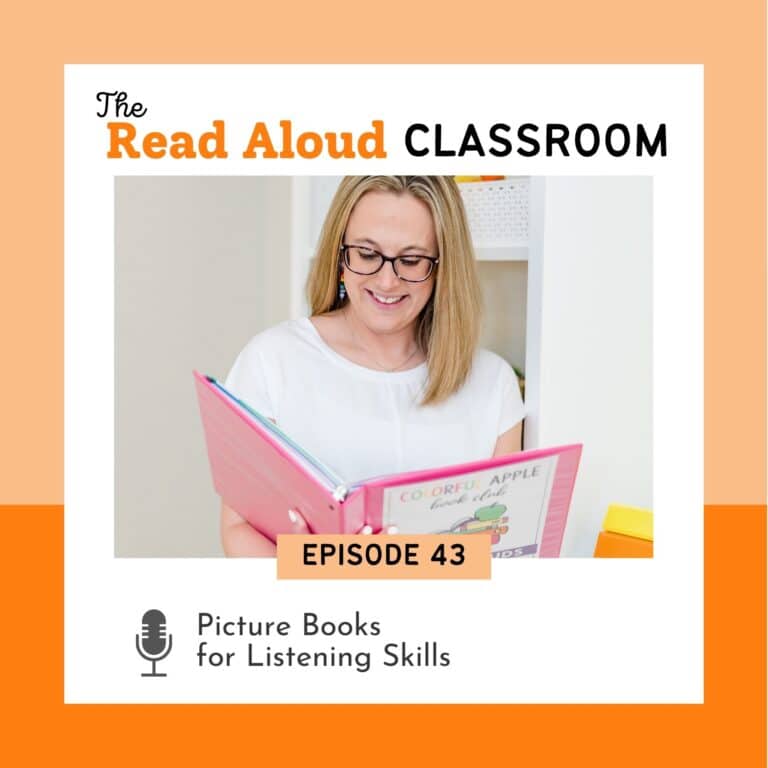
Welcome to the Read Aloud Classroom where we’re making picture books work for you even with a packed schedule. Hi, I’m Sarah, an educator who believes in the power of read alouds to transform your teaching without adding to our already full plates.
You know that feeling when you’re trying to read aloud to your class and it feels like you’re competing with twenty different side conversations? Or when you ask a question and three students blurt out answers before you’ve even finished speaking? We’ve all been there, and today I want to share something that can transform those chaotic read aloud moments into meaningful learning experiences.
Whether you’re setting up classroom expectations at the beginning of the year or finding yourself needing to revisit listening skills in January—or really any time—picture books are your secret weapon for building better listeners. And the beautiful thing is, you’re already doing read alouds! We’re just going to be more intentional about which books we choose.
Today, I’m sharing eleven incredible picture books that will help your students develop those crucial listening skills while enjoying fantastic stories. I’ve organized them into three categories to make it easier for you to choose the right book for your specific classroom needs.
Books About Learning to Listen When You Love to Talk
Let’s start with books perfect for those students who just can’t seem to stop talking—you know the ones! These stories help children understand that while having lots to say is wonderful, learning when to listen is equally important.
First up is “Lacey Walker, Nonstop Talker” by Christianne Jones. Lacey is a delightful character who talks from the moment she wakes up until she goes to bed. But when she loses her voice, she’s forced to do something she doesn’t usually do—listen. As she watches what happens when she finally stops talking, Lacey realizes she’s missed out on a lot by not focusing on the people around her.
This book is perfect for introducing the concept of “whole-body listening” early in the year. You can use Lacey’s experience to teach students about watching with their eyes, staying still with their bodies, and thinking with their brains. It’s such a relatable story that even your most talkative students will connect with Lacey’s journey.
Next, we have “Quiet Please, Owen McPhee” by Trudy Ludwig. Owen loves to talk, talk, talk, and all his talking gets in the way of listening to others. When he wakes up with laryngitis, he learns how nice it can be to actually listen. Instead of interrupting and spoiling things, Owen discovers the importance of being a good friend through listening.
What I love about this book is that it comes from the same team who created “The Invisible Boy,” so you know it’s going to handle social dynamics beautifully. It’s perfect for those classroom discussions about friendship and how listening helps us connect with others.
“My Mouth is a Volcano” by Julia Cook tackles interrupting head-on. Louis always interrupts because all his thoughts feel very important to him. When he has something to say, his words rumble and grumble in his tummy, wiggle and jiggle on his tongue, and then push on his teeth before he erupts! But when others begin to interrupt Louis, he learns how to respectfully wait for his turn to talk.
Julia Cook gives readers a concrete tool to help manage those “volcanic” moments, which makes this book incredibly practical for classroom use. You can refer back to the volcano metaphor throughout the year when students need reminders about waiting their turn.
“Wordy Birdy” by Tammi Sauer brings us another chatty character, but this one teaches a slightly different lesson. Wordy Birdy talks so much that she doesn’t notice a “No Trespassing” sign and ends up in danger. This story helps students understand that sometimes we need to listen because we might miss important information—especially safety information from adults.
This book is particularly valuable for your youngest students who really need to understand the importance of paying attention when adults are speaking. It’s a fun way to address a serious topic without being preachy.
Now let’s talk about “Listen, Buddy” by Helen Lester. This hilarious story about a distracted bunny always gets kids giggling. Buddy’s head is up in the clouds, which makes him terrible at listening. When his dad asks for a pen, Buddy brings him a hen. When his mom asks for bread, he brings her a slice of bed—complete with using a saw!
The humor in this book makes it perfect for keeping students engaged while delivering the message that listening is an active choice. Plus, the silly mix-ups help students understand what happens when we don’t really pay attention.
Finally, “Interrupting Chicken” by David Ezra Stein rounds out this category beautifully. It’s bedtime story time, and Papa reminds the little red chicken not to interrupt. But she can’t help herself! Whether it’s Hansel and Gretel or Little Red Riding Hood, she jumps into the story to save the characters. When it’s her turn to tell a story, will her sleepy papa make it to the end without interrupting?
This Caldecott Honor book is perfect for discussing self-control and taking turns during storytelling. You can use it to establish expectations for your own read aloud time—reminding students that stories need listeners to be complete.
Books About Empathetic Listening
Now let’s move to books that teach the deeper skill of listening with empathy—really hearing and understanding others.
“The Rabbit Listened” by Cori Doerrfeld is absolutely the best picture book about empathetic listening ever written. When something sad happens to Taylor, all the animals want to help with advice—talk it out, get angry, move on. But the rabbit simply sits and listens, which is exactly what Taylor needs.
This book is perfect for teaching students that sometimes the best way to help someone is just to listen. It’s particularly powerful early in the year when you’re building classroom community and teaching students how to support each other.
“I Have a Little Problem Said the Bear” by Heinz Janisch offers a different perspective—showing us what it feels like when no one listens to you. Bear has a problem and asks everyone for help, but as soon as he mentions having a problem, they interrupt with solutions without actually listening to what the problem is. Finally, a little fly sits down and really listens, and together they find a solution.
This book helps students understand how frustrating it can be when someone doesn’t truly listen to you. It’s perfect for building empathy and understanding why we need to hear the whole story before jumping in with help or advice.
Books About Mindful Listening
Our final category focuses on developing awareness and intentional listening skills.
“10 Ways to Hear Snow” by Cathy Camper invites students to slow down and practice sensory awareness. In this beautiful story, a young girl goes for a walk after a snowstorm and listens to the sounds around her—the scrape of a shovel, the crunch of boots, the pat-pat of mittens smoothing a snowman.
This book is perfect for teaching focused listening skills and mindfulness. You can use it to take your own listening walks around the school, encouraging students to notice sounds they might normally miss. It’s a wonderful way to practice the skill of intentional listening.
“Bear Has a Story to Tell” by Philip C. Stead is such a gentle book about patience and making time for others. Bear has a story to tell, but all his friends are too busy getting ready for winter. After Bear helps each friend with their preparations, will anyone still be awake to hear his story?
This book beautifully illustrates how we show respect by making time to listen to each other. It’s perfect for discussions about being patient listeners and making others feel valued. Plus, the gorgeous watercolor illustrations make this a joy to share with students.
Finally, “Howard B. Wigglebottom Learns to Listen” by Howard Binkow rounds out our collection with practical lessons about becoming a better listener. Howard learns important life lessons, including listening to that little voice in your head that helps you make good choices.
This book explicitly teaches listening skills and reminds students that no one ever gets in trouble for listening too much! It’s perfect for reinforcing all the listening concepts you’ve been building with the other books.
Making These Books Work in Your Classroom
Now, let me share a few quick tips for using these books effectively during your read aloud time. First, choose books that match your current classroom needs. If you’re dealing with lots of interrupting, start with “My Mouth is a Volcano” or “Interrupting Chicken.” If students seem to struggle with empathy, begin with “The Rabbit Listened.”
Remember, you don’t have to use all these books at once! Spread them throughout the year, revisiting listening skills whenever you notice they need reinforcement. January after winter break? Perfect time for “Listen, Buddy.” March when everyone’s getting chatty? Bring back “Lacey Walker.”
For several of these books—including “10 Ways to Hear Snow,” “Bear Has a Story to Tell,” and “Interrupting Chicken”—you’ll find complete lessons with discussion questions and activities in the Colorful Apple Book Club. These lessons take the guesswork out of extending the learning beyond the story.
Here’s what I want you to do: pick just one of these books to try this week. Maybe it’s one you already have on your shelf, or maybe there’s one that perfectly addresses what you’re seeing in your classroom right now. Read it with intention, thinking about the listening skills you want to develop. Notice how your students respond, and celebrate those small moments when you see improved listening happening.
You already know the power of a great picture book to capture students’ attention and teach important lessons. These eleven books will help you be more intentional about building the listening skills that make everything else in your classroom run more smoothly.
Remember, good listeners aren’t born—they’re developed through practice and the right stories. And you’re the perfect teacher to help your students become the thoughtful, empathetic listeners our world needs.
If you found today’s episode helpful, I’d be so grateful if you’d subscribe to the podcast and leave a positive review. This helps other teachers find our little community here in the Read Aloud Classroom.
Next week, we’ll be diving into picture books that help students develop growth mindset—perfect for those moments when learning gets challenging. You won’t want to miss it!
Thanks for joining me today in the Read Aloud Classroom. Come connect with me on Instagram @thecolorfulapple and find all the links and resources mentioned today at thecolorfulapple.com. I can’t wait to see you next week!