Picture this: You’re preparing for a new school year, dreaming of that magical classroom community where every student feels seen, valued, and connected. But between lesson planning, room setup, and all those back-to-school tasks, actually building that community can feel overwhelming. Here’s what I know—you already have one of the most powerful community-building tools right at your fingertips: picture books. And whether you’re welcoming students for the first time in August or rebuilding connections after winter break, these stories will transform your classroom.
As educators, we understand that a strong classroom community doesn’t happen by accident. It requires intentional work, meaningful conversations, and shared experiences that help students see themselves and their classmates more clearly. Picture books provide the perfect foundation for these community-building moments, offering accessible entry points into discussions about kindness, inclusion, empathy, and belonging.
Why Picture Books Are Essential for Community Building
Picture books have this incredible ability to open hearts and minds in ways that direct instruction simply can’t match. They help students practice empathy by seeing the world through different characters’ eyes, provide safe spaces to discuss challenging emotions and situations, and create shared experiences that bond your class together.
When you read a powerful story aloud, something magical happens in your classroom. Students lean in, make connections, and begin to understand that their experiences—both struggles and joys—are shared by others. These moments of recognition and understanding become the building blocks of authentic classroom community.
10 Community-Building Picture Books for Your Classroom
The Invisible Boy by Trudy Ludwig
This heartwarming story follows Brian, a quiet student who literally feels invisible at school. Author Trudy Ludwig and illustrator Patrice Barton use stunning visual storytelling to show Brian’s journey from isolation to inclusion. When Brian feels invisible, he’s drawn in black and white, but as he becomes visible to his peers through acts of kindness, he transforms into full color.
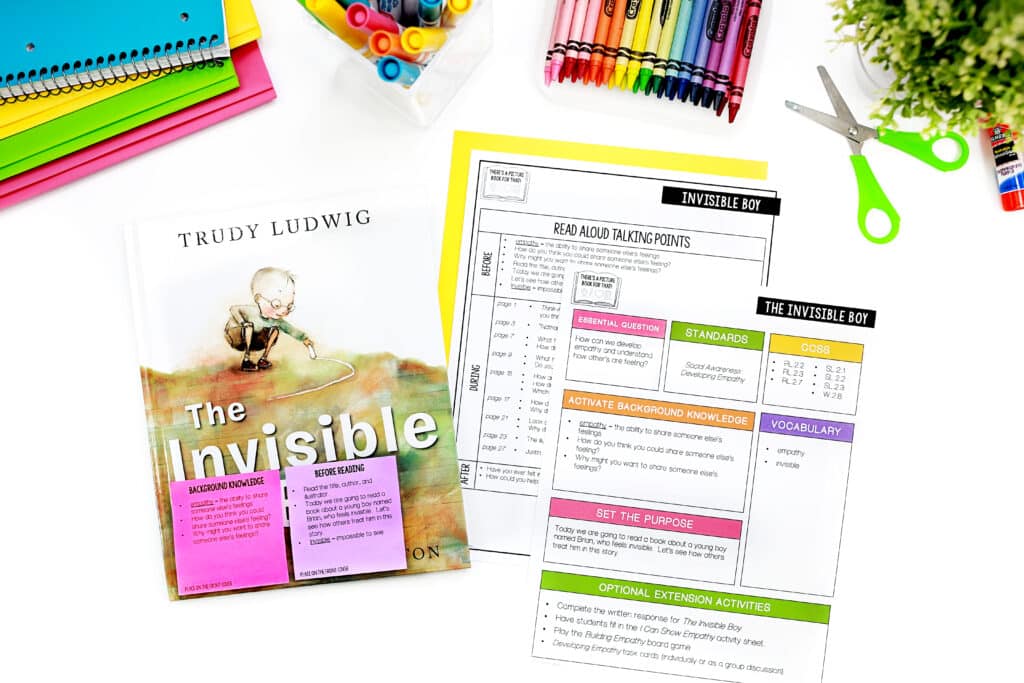
Lesson Plan for The Invisible Boy
Brian experiences what too many of our students face—being overlooked for group projects, never invited to play, and feeling genuinely unseen by his classmates. Everything changes when new student Justin arrives and Brian, knowing what it feels like to be left out, reaches out to welcome him. In that beautiful act of inclusion, both boys find friendship and belonging.
This book opens powerful conversations about noticing classmates who might feel overlooked and taking action to include them. It helps students understand their role in creating an inclusive environment where everyone feels valued and seen.
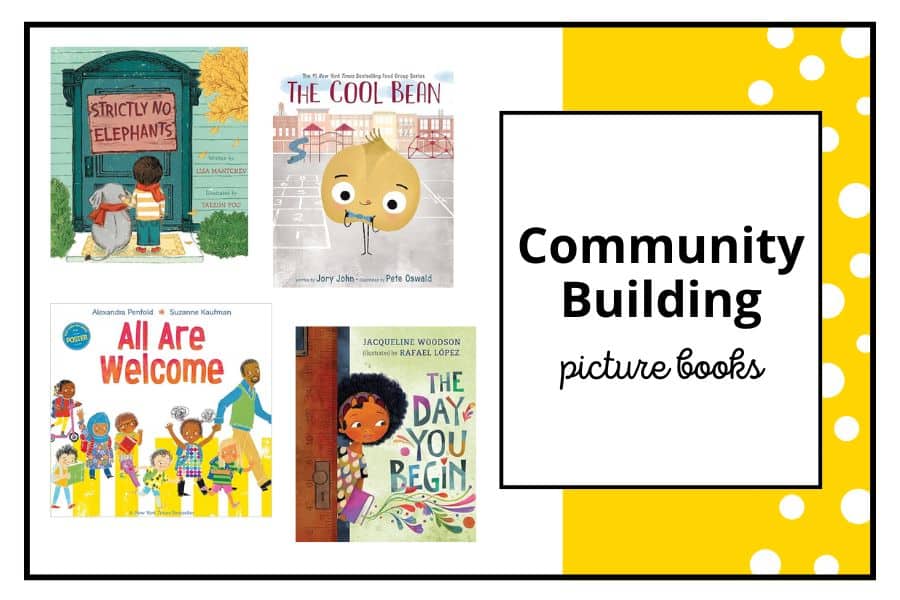
All Are Welcome by Alexandra Penfold
“All Are Welcome” is a celebration of inclusiveness, acceptance, and the beauty of diverse school communities. Author Alexandra Penfold and illustrator Suzanne Kaufman take readers through a complete day at school, showing children from various backgrounds learning, playing, and celebrating together.
The illustrations beautifully depict students wearing patkas, hijabs, baseball caps, and yarmulkes, all learning side by side and honoring each other’s traditions. The book naturally establishes that warm, welcoming tone essential for strong classroom communities while affirming that every student belongs exactly as they are.
This title is particularly powerful for the first day of school, as it sets clear expectations that your classroom is a place where differences are celebrated and everyone contributes to the community. It provides an excellent foundation for ongoing discussions about cultural diversity and mutual respect.
The Cool Bean by Jory John and Pete Oswald
From the bestselling team behind “The Bad Seed,” this story redefines what it truly means to be “cool.” The narrative follows a has-bean who desperately wants to fit in with the cool beans but always finds himself on the sidelines, trying everything to belong but never quite succeeding.
The beautiful twist comes when the has-bean experiences a particularly difficult day, and the cool beans demonstrate through acts of kindness what genuine coolness actually looks like. The story reveals that true coolness isn’t about appearance, attitude, or social status—it’s about caring for others and putting their needs before your own.
This book sparks meaningful conversations about friendship, peer pressure, and authentic character. Students will relate to feelings of wanting to fit in while learning to value kindness and compassion over superficial popularity.
We Don’t Eat Our Classmates by Ryan T. Higgins
This delightfully humorous story tackles the serious topic of social expectations and empathy. Penelope Rex is thrilled about starting school and making new friends, but she faces one significant challenge—she can’t stop thinking about how delicious her classmates look and keeps eating them.

Lesson Plan for We Don’t Eat Our Classmates
Author and illustrator Ryan T. Higgins uses comedy to explore how we learn to navigate social situations and consider how our actions affect others. When Penelope finds herself no longer at the top of the food chain, she experiences firsthand what it feels like to be someone else’s target, leading to important realizations about treating others with respect.
Despite its silly premise, students immediately grasp the deeper message about considering others’ feelings and learning appropriate social behavior. This book provides an engaging way to discuss classroom expectations and mutual respect.
Do Unto Otters by Laurie Keller
This clever take on the Golden Rule follows Mr. Rabbit, who feels nervous about his new otter neighbors. He worries about whether they’ll get along and fears being stuck with uncomfortable neighbors. Fortunately, his friend Mr. Owl reminds him of the fundamental principle of treating others the way you want to be treated.

Lesson Plan for Do Unto Otters
Author and illustrator Laurie Keller infuses her signature humor throughout this exploration of respect and kindness. The story demonstrates that since everyone wants to be treated with kindness and respect, extending these qualities to others creates the foundation for positive relationships.
This book is excellent for establishing classroom expectations and helping students understand that mutual respect forms the cornerstone of any thriving community. It provides concrete examples of how the Golden Rule applies to everyday interactions.
The Day You Begin by Jacqueline Woodson
This poetic and powerful story explores the courage it takes to be yourself in a world where you might feel different. Author Jacqueline Woodson and illustrator Rafael López follow various children who feel scared or alone—perhaps because they speak with an accent, eat different foods, or have experiences that set them apart from their classmates.

The book validates the universal experience of feeling like an outsider while celebrating the bravery required to share who you are authentically. It shows the magic that happens when we reach out to others and accept them for exactly who they are, differences and all.
This story is particularly meaningful for students who might feel different or out of place. Whether you’re reading it at the beginning of the year when everything feels new or mid-year when some students still feel like they don’t quite belong, it opens hearts and builds bridges between classmates.
Be Kind by Pat Zietlow Miller
This gentle story begins with a simple moment that many students will recognize—Tanisha spills grape juice on her beautiful new dress and feels devastated. When a classmate witnesses this incident, she wants to help but wonders exactly how to show kindness effectively.
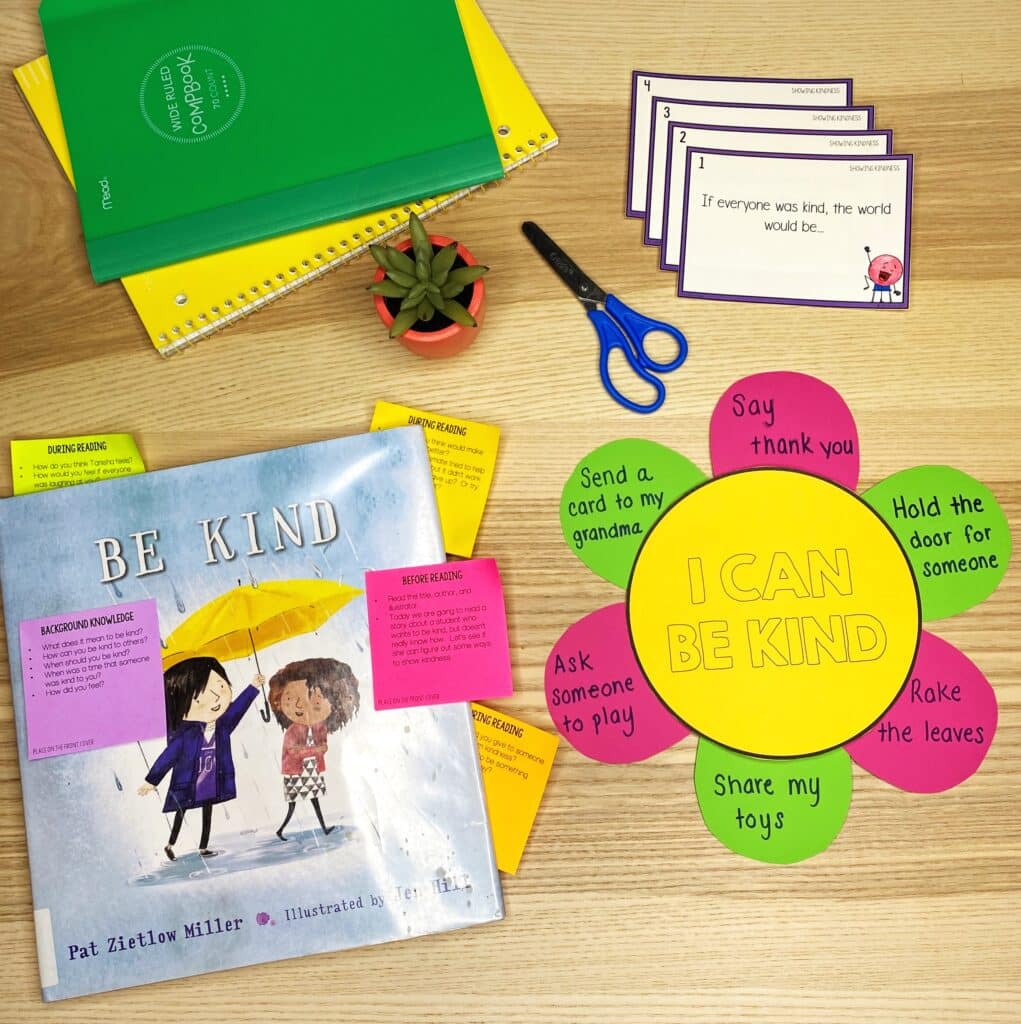
Author Pat Zietlow Miller and illustrator Jen Hill take readers on a journey exploring the many ways we can demonstrate kindness to others. From asking someone to play to standing up for someone being treated unfairly, the book shows that kindness comes in countless forms and is always within our reach.
What makes this book particularly valuable is its practical approach. Students can immediately envision themselves in similar situations and identify specific ways they can show kindness in their own classroom and beyond. It provides concrete examples that students can implement immediately.
Don’t Hug Doug by Carrie Finison
This important story addresses personal boundaries and consent in an age-appropriate way. Doug doesn’t enjoy hugs—ever. Regardless of the situation, physical comfort through hugging isn’t what he prefers. However, he’s perfectly comfortable with high fives, low fives, side fives, and various other forms of friendly interaction.
Author Carrie Finison and illustrator Daniel Wiseman tackle the crucial concept that everyone has different preferences regarding physical contact and personal space. Some students love hugs and find them comforting, while others feel uncomfortable or overwhelmed by physical affection.
Building a strong classroom community requires that everyone feels safe and respected, which includes honoring individual boundaries around physical contact. This book opens essential conversations about consent, personal space, and showing care for others in ways that feel comfortable for everyone involved.
Lesson Plan for Don’t Hug Doug
Strictly No Elephants by Lisa Mantchev
This touching tale follows a young boy and his beloved pet elephant who share a special bond and do everything together. When Pet Club Day arrives, the boy eagerly anticipates introducing his elephant to other animals, only to discover a “strictly no elephants” policy that excludes them from participation.
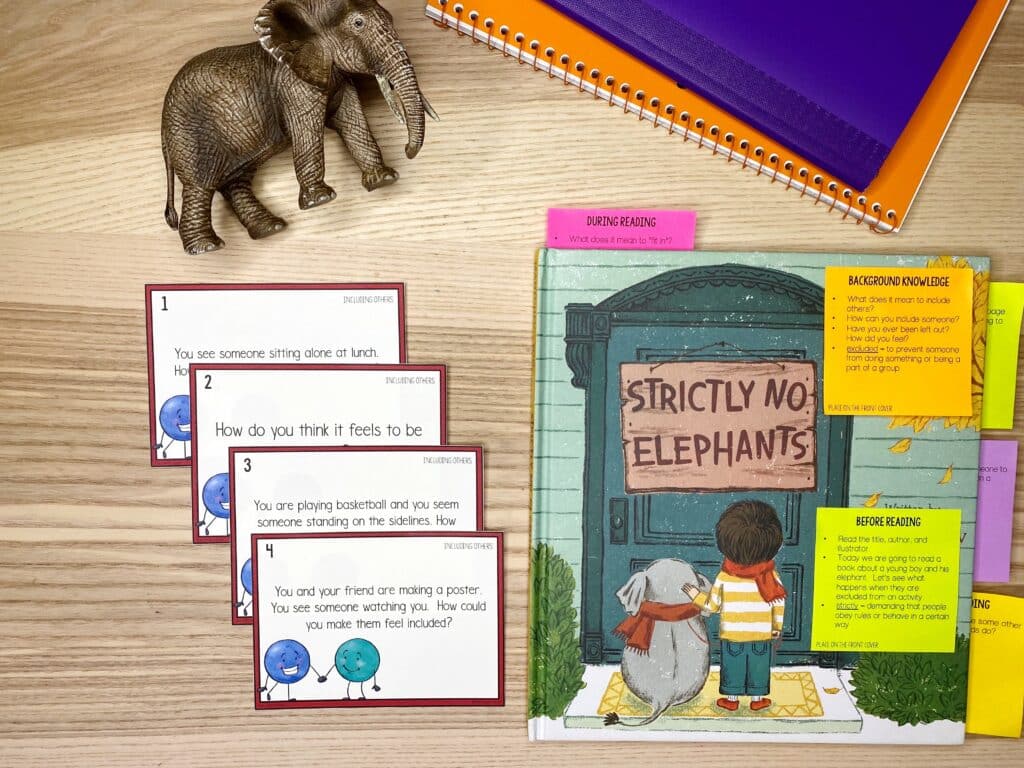
Strictly No Elephants Lesson Plan
Rather than simply accepting this rejection, the boy takes positive action by creating his own inclusive pet club—one that welcomes animals of all shapes and sizes. Author Lisa Mantchev and illustrator Taeeun Yoo beautifully illustrate how happiness blooms when previously excluded individuals finally find belonging and friendship.
This story addresses the painful reality of exclusion while empowering students to become active includers. It demonstrates that when existing groups aren’t welcoming everyone, we have the power to create new opportunities and spaces where all can belong.
Chrysanthemum by Kevin Henkes
This beloved classic explores themes of self-acceptance, the power of words, and the importance of embracing what makes us unique. Chrysanthemum absolutely loves her name until her first day of school, when classmates begin teasing her for being “named after a flower.” Their hurtful words cause her confidence to wilt dramatically.
Author and illustrator Kevin Henkes has created an honest portrayal of how teasing affects children’s self-esteem and sense of belonging. The story beautifully demonstrates how the right support—in this case, from a caring teacher—can help someone flourish again after experiencing hurt.
This book is ideal for the first week of school because it encourages students to think about and appreciate their own names while fostering respect for their classmates’ identities. It opens crucial conversations about the impact of our words and the importance of treating others with kindness and acceptance.
Implementing These Books in Your Classroom
These ten picture books provide powerful foundations for building the kind of classroom community where every student feels valued, seen, and connected. Each story offers unique entry points into conversations about empathy, inclusion, respect, and belonging—conversations that shape how students interact with one another throughout the year.
Consider incorporating these books into your morning meetings, using them as anchor texts for social-emotional learning lessons, or returning to them when specific community challenges arise. The beauty of these stories lies in their ability to address real classroom dynamics while providing students with concrete examples of positive behavior and inclusive thinking.
For each of these titles, you can find comprehensive lesson plans and extension activities in the Colorful Apple Book Club, designed to help you maximize the community-building potential of every story. These resources include discussion guides, writing prompts, and hands-on activities that extend the learning beyond the initial read-aloud experience.
Building Community That Lasts
Remember that building classroom community isn’t a one-time event that happens during the first week of school. It’s an ongoing process that requires consistent attention, meaningful conversations, and shared experiences that bring students together. These picture books provide the perfect tools for nurturing that sense of belonging and connection throughout the entire school year.
Whether you’re setting the tone at the beginning of the year, rebuilding after a break, or addressing specific challenges that arise, these stories will help you create the warm, inclusive environment where every student can thrive. Because when students feel safe, seen, and valued, learning becomes not just possible—it becomes joyful.