
Introduction: The Last-Minute Read Aloud Dilemma
As educators, we’ve all experienced that moment of realization halfway through a read aloud that the book we hastily selected isn’t accomplishing what we intended. Several years ago, I found myself in this exact situation. I had grabbed “Because of You” by Christian Robinson, intending to teach story elements to my class. Midway through, I realized there were virtually no story elements to highlight in this particular book. While it was a wonderful book with important messages, it simply wasn’t aligned with my intended teaching objective.
This experience highlighted a challenge many teachers face daily: finding time to properly prepare for read alouds that are both engaging and instructionally purposeful. With curriculum demands, administrative requirements, and countless other responsibilities competing for our attention, thoughtful read aloud preparation often falls to the bottom of our priority list.
However, research consistently demonstrates that interactive read alouds with strategic questioning lead to significantly improved comprehension and engagement. The question becomes: How can busy educators deliver high-quality read aloud experiences without sacrificing precious planning time?
The Value of Intentional Read Aloud Preparation
The difference between a good read aloud and a truly transformative one rarely depends on the book selection alone. Rather, it’s the intentionality and preparation behind the experience that creates lasting impact. When we approach read alouds with clear instructional focuses and strategic questioning, we transform what might otherwise be passive listening into active, engaged learning.
Unfortunately, when we’re rushed or unprepared, several problems can emerge:
- We miss valuable teaching opportunities that naturally arise in the text
- Discussions become unfocused or superficial
- Student engagement diminishes as the purpose becomes unclear
- We struggle to connect the read aloud to our broader curriculum goals
- The experience feels disjointed rather than cohesive

Many educators report skipping read alouds altogether on particularly busy days because they haven’t had time to properly prepare. This represents a significant loss of instructional potential, as picture books offer unique opportunities to:
- Build background knowledge
- Develop vocabulary in context
- Model fluent reading and thinking strategies
- Foster discussion skills
- Create emotional connections to learning
- Bridge abstract concepts with concrete examples
Implementing a consistent framework for read aloud preparation allows you to maximize these benefits while minimizing preparation time. Think of it as having a reliable recipe that you know will produce excellent results, even when you’re pressed for time.
The 10-Minute Read Aloud Planning Framework
This streamlined approach will help you transform any picture book into a powerful lesson in just ten minutes. Each step is designed to be both efficient and effective, ensuring that your read aloud delivers meaningful instruction without requiring extensive preparation.
Step 1: Select ONE Clear Teaching Focus (2 minutes)
Begin by identifying a single instructional focus for your read aloud. While it may be tempting to address multiple skills or concepts simultaneously, focusing on a single objective ensures clarity and depth of understanding. Your teaching focus might be:
- A reading strategy (making predictions, visualizing, inferring)
- A comprehension skill (identifying main idea, analyzing character traits)
- A content-area concept (water cycle, historical events, civic responsibility)
- A writing technique (descriptive language, dialogue, text structure)
- A social-emotional competency (empathy, perseverance, conflict resolution)
The key is specificity. Rather than broadly approaching “comprehension,” narrow your focus to “identifying cause and effect relationships” or “recognizing character motivation.” This precision allows for deeper exploration within your limited time frame.
Step 2: Identify Strategic Stopping Points (3 minutes)
Quickly preview the book, identifying 3-4 natural places where your teaching focus is particularly evident. These become your planned stopping points for discussion. Look for:
- Pages where your chosen skill/concept is clearly illustrated
- Natural transitions in the text or illustrations
- Moments of surprise, conflict, or revelation
- Places where students might naturally have questions
- Opportunities to clarify understanding before moving forward
Resist the temptation to stop too frequently, as this can disrupt the flow of the story and diminish engagement. Three to four strategic pauses typically provide sufficient opportunity for meaningful discussion without fragmenting the reading experience.
Step 3: Craft Targeted Questions (3 minutes)
For each stopping point, develop 1-2 questions that specifically address your teaching focus. Effective questions:
- Promote higher-order thinking
- Connect to your instructional objective
- Allow for multiple interpretations or responses
- Build upon previous discussion points
- Support deeper engagement with the text

Using question stems can significantly expedite this process. Here are some examples organized by purpose:
For making predictions:
- “Based on what we’ve read so far, what might happen next?”
- “How do you think the character will solve this problem?”
For making connections:
- “How does this remind you of something in your own life?”
- “How does this connect to what we learned about in science?”
For analyzing character:
- “Why do you think the character made that choice?”
- “How do you think the character is feeling right now? What evidence supports your thinking?”
For content-area connections:
- “How does this example illustrate the concept of _____?”
- “What similarities do you notice between this story and our study of _____?”
Additionally, prepare one opening question to activate prior knowledge and one closing question to help students apply or extend their learning.
Step 4: Create Visual Reminders (2 minutes)
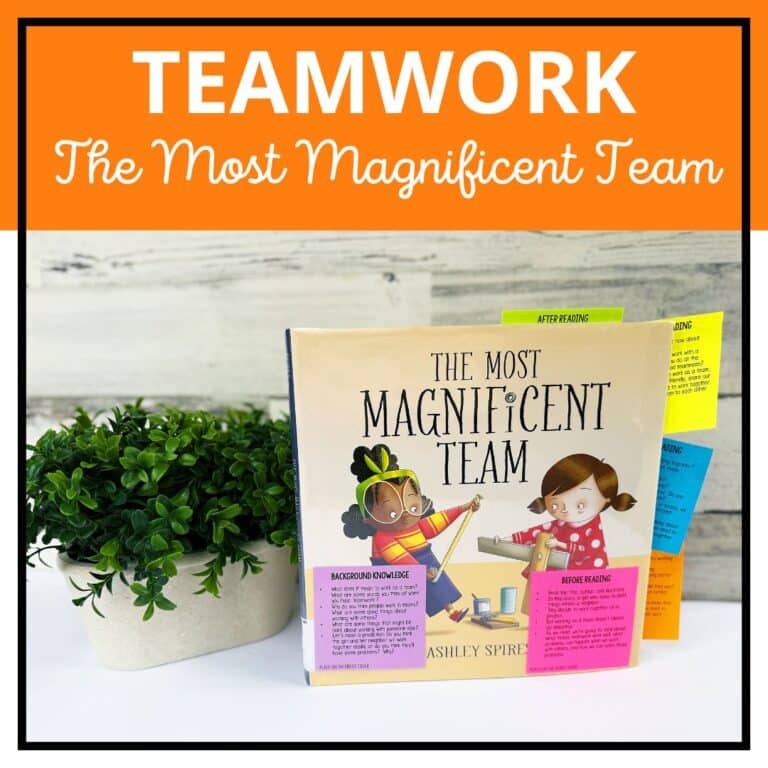
Write your questions on brightly colored sticky notes and place them directly on the corresponding pages of the book. This simple organizational strategy:
- Eliminates the need to memorize questions or stopping points
- Allows you to remain fully present during the reading
- Ensures you don’t miss important teaching moments
- Creates a reusable resource for future read alouds with the same book
- Provides a visual reminder of your instructional sequence

Color-coding can further enhance organization—perhaps using yellow notes for prediction questions, blue for character analysis, and green for vocabulary discussion.
Maximizing Cross-Curricular Impact
One of the most powerful aspects of picture books is their versatility across the curriculum. With minimal additional planning, you can leverage the same book for multiple instructional purposes, significantly increasing your return on preparation time.
Multiple Uses for Single Texts
Consider how one picture book might serve various instructional purposes:
“The Water Princess” by Susan Verde
- Reading: Analyze character motivation and perspective
- Science: Explore water conservation and access issues
- Social Studies: Discuss global awareness and cultural perspectives
- SEL: Develop empathy and appreciation for diverse life experiences
By approaching the same text through different lenses, you:
- Reduce the number of new books students must process
- Deepen understanding through repeated exposure
- Create meaningful connections across content areas
- Maximize limited instructional time
Creating a Simple Tracking System
Develop a straightforward method for documenting books you’ve used and the teaching points addressed. This might be:
- A dedicated notebook with book titles and related instructional focuses
- A spreadsheet organized by curriculum area or standard
- A digital note-taking system with searchable tags
- A physical filing system with note cards for each book
This documentation prevents redundancy, helps identify gaps in your instruction, and builds a valuable resource for future planning. When a particular standard or concept proves challenging for students, you can quickly reference which books might provide additional support.

Finding Unexpected Connections
Some of the most powerful teaching moments emerge from unexpected connections between picture books and curriculum:
- Discovering mathematical patterns in a narrative text
- Identifying scientific principles illustrated in fiction
- Recognizing historical perspectives embedded in contemporary stories
- Observing artistic techniques that enhance storytelling
These connections make learning more cohesive and meaningful for students while demonstrating the integrated nature of knowledge.
Justifying Read Aloud Time
When read alouds are strategically aligned with curriculum standards, they become easier to defend as essential instructional practice. The framework enables you to:
- Articulate specific learning objectives addressed during read alouds
- Document connections to grade-level standards
- Demonstrate how read alouds complement and enhance core instruction
- Provide evidence of student learning through discussions and responses
This intentionality transforms read alouds from perceived “nice-to-have” activities into recognized “must-have” instructional approaches.
Streamlining Your Process Even Further
While the 10-minute framework significantly reduces preparation time, there are situations when even ten minutes feels unattainable. In particularly demanding seasons of teaching, consider how prepared resources might further support your instructional goals.
The Value of Ready-Made Resources
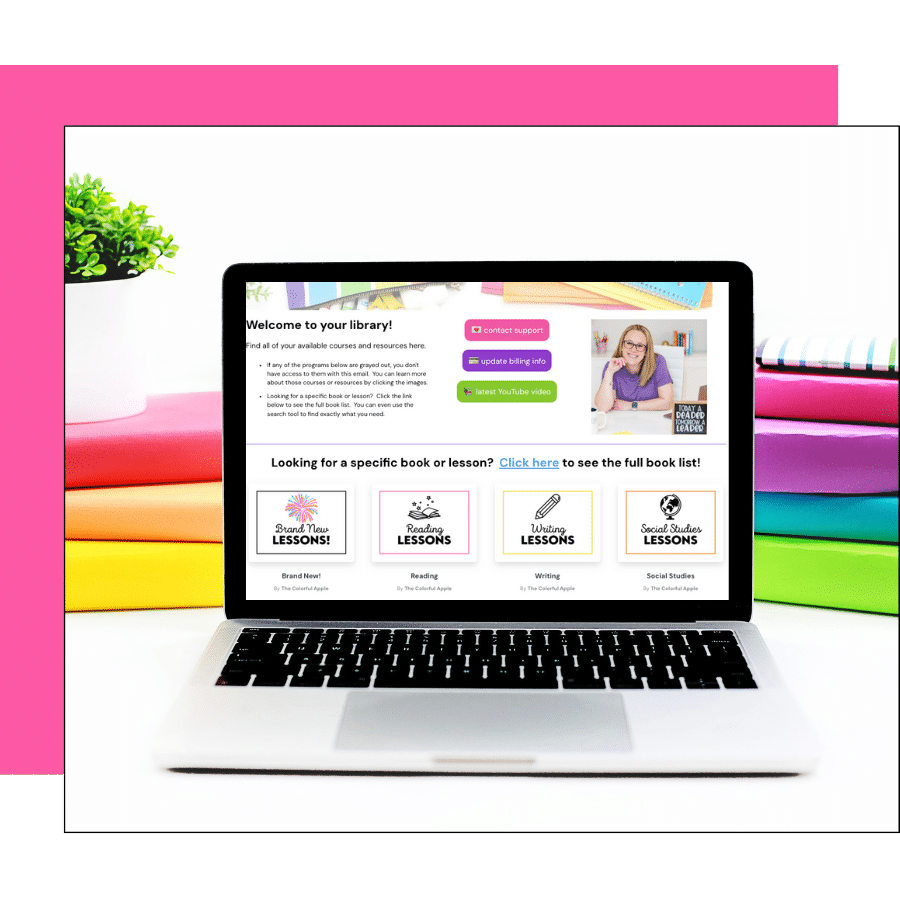
When surveying thousands of teachers about their read aloud challenges, one of the most frequent responses was a desire for complete, ready-to-implement lessons. This sentiment reflects the reality that teacher time and energy are finite resources that must be strategically allocated.

Comprehensive read aloud resources might include:
- Pre-selected books aligned to specific standards or concepts
- Ready-to-use discussion questions on sticky notes
- Extension activities that reinforce learning objectives
- Cross-curricular connections to maximize instructional impact
- Assessment options to document student understanding
Such resources enable educators to preserve mental energy for the aspects of teaching that cannot be prepared in advance—the responsive interactions, individualized support, and relationship-building that form the heart of effective instruction.
Balancing Efficiency and Personalization
Even when utilizing prepared resources, educators maintain the essential role of adapting instruction to their unique classroom contexts. Ready-made materials serve not as rigid scripts but as thoughtful foundations that can be customized to address:
- The specific needs of your students
- Your teaching style and strengths
- Your classroom culture and established routines
- Current events or community contexts
- Connections to other aspects of your curriculum
The goal is not to eliminate teacher decision-making but rather to redirect it toward the most impactful aspects of instruction.

Implementing Your 10-Minute Framework
To transform this framework from concept to practice, I recommend the following action steps:
- Select a starting point – Choose a picture book from your classroom library that you enjoy and are familiar with.
- Apply the framework with fidelity – Set an actual timer for 10 minutes and work through each step as described. Time constraints often enhance focus and efficiency.
- Implement your planned read aloud – Notice the difference in your confidence and the quality of student engagement compared to less-prepared read alouds.
- Reflect on the experience – Consider what worked well and what you might adjust for future planning sessions.
- Establish a documentation system – Begin tracking the books you use and the instructional focuses they address.
- Identify areas for additional support – Consider which aspects of read aloud planning consistently challenge you and explore resources that might address these needs.
Conclusion: Making Every Minute Count
The 10-minute framework transforms read aloud preparation from an overwhelming task into a manageable, systematic process. By focusing your planning, you enhance both efficiency and effectiveness, creating powerful learning experiences without sacrificing your valuable time.
Remember that with practice, this process becomes increasingly intuitive. You’ll develop the ability to quickly identify teaching opportunities within texts and craft questions that promote deeper thinking. The initial investment of implementing this framework yields significant returns in instructional quality and personal sustainability.
As you consider your professional priorities, reflect on where prepared resources might further support your teaching practice. The most effective educators recognize that strategic use of ready-made materials doesn’t diminish their professionalism—it enhances it by allowing focused attention on the aspects of teaching that matter most.
I invite you to try this framework with one of your favorite picture books this week. Document your experience and the impact on student engagement. Your feedback and insights contribute to our collective understanding of effective literacy practices in today’s demanding educational landscape.
Listen on the Podcast
Would you like to share your experience with the 10-minute framework? Connect with me on Instagram @thecolorfulapple or email me directly. I’m always eager to hear how these strategies work in different classroom contexts!