
The Hidden Potential in Your Classroom Library
As educators, we constantly face the challenge of limited resources—whether it’s time, budget, or instructional materials. One of the most effective strategies I’ve discovered in my years of teaching is maximizing the value of high-quality picture books by using them across multiple subjects. This approach not only saves valuable planning time and stretches your classroom budget, but it actually enhances student learning through repeated exposure to excellent texts.
Many teachers express frustration about finding enough time to incorporate read alouds while meeting all curricular demands. I frequently hear concerns like “I don’t have enough time to teach reading AND science AND social studies separately” or “I love read alouds but can’t justify the time with everything else on my plate.” The good news is that strategic selection and planned reuse of picture books can transform this challenge into an opportunity.
Consider this: every high-quality picture book contains layers of teaching potential that extend far beyond its most obvious use. By recognizing these layers, you can transform a single book into a versatile teaching tool that works effectively across your curriculum.
The Multi-Dimensional Nature of Quality Picture Books
Quality picture books naturally contain multiple instructional opportunities. While we often initially categorize books by their most obvious subject connection, most excellent children’s literature offers teaching potential across reading skills, science concepts, social studies connections, and social-emotional learning.
For example, “Because of an Acorn” by Lola M. Schaefer might initially appear to be simply a science book about forest ecosystems. However, upon closer examination, it provides an exemplary text for teaching:
- Reading: The cause-and-effect relationship is structured clearly throughout the text
- Science: Life cycles and ecosystem interdependence are beautifully illustrated
- Writing: The pattern text offers an accessible model for students’ own writing
- Mathematical thinking: Sequential relationships build in a logical progression
This multi-dimensional nature exists in numerous picture books in your classroom library. The key is developing the ability to recognize these different dimensions and plan for their strategic use.
Four Exemplary Multi-Purpose Books for Your Classroom
Because of an Acorn by Lola M. Schaefer
This seemingly simple book offers remarkable versatility across the curriculum:
- Reading instruction: The text structure provides a perfect vehicle for teaching cause and effect relationships. The clear pattern (“Because of an acorn, a tree grew. Because of a tree…”) makes this concept accessible even to young readers.
- Science instruction: The entire life cycle of a forest ecosystem unfolds naturally through the narrative, showing interdependence between plants and animals.
- Writing instruction: The predictable pattern offers an ideal structure for students to create their own “Because of a…” stories, supporting understanding of both cause-effect and expository writing.
Lillian’s Right to Vote by Jonah Winter
This powerful book works effectively across multiple subject areas:
- Reading instruction: The chronological sequence of Lillian’s walk up the hill provides a clear framework for teaching sequencing and time order in narratives.
- Social studies instruction: The historical events Lillian remembers create natural entry points for discussions about voting rights, civil rights, and civic responsibility.
- Social-emotional learning: Lillian’s perseverance and commitment to justice offer opportunities to discuss standing up for what’s right despite obstacles.
- Mathematics connection: For upper elementary students, the historical timeline can be mapped mathematically to understand historical perspective.

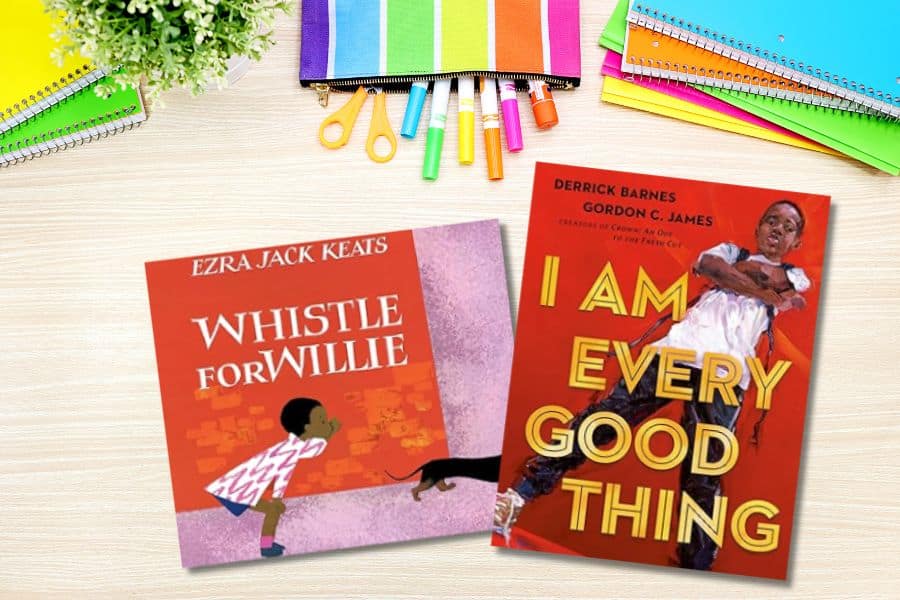
Whistle for Willie by Ezra Jack Keats
This classic book offers multiple instructional applications:
- Reading instruction: The clear story structure makes it ideal for teaching sequencing and narrative elements.
- Social-emotional learning: Peter’s persistence in learning to whistle despite initial failures provides an authentic context for discussing growth mindset and perseverance.
- Physical education connection: The story naturally connects to motor skill development and practice.
- Writing instruction: The narrative structure provides an excellent model for personal narratives about learning new skills.
I am Every Good Thing by Derrick Barnes
This contemporary text offers rich instructional potential:
- Reading instruction: The first-person point of view and clear author’s purpose make this text perfect for teaching these key reading concepts.
- Social-emotional learning: The affirmations throughout the book support lessons on positive self-identity and self-esteem.
- Writing instruction: The powerful “I am” statements provide an effective model for students’ own affirmation writing.
- Social studies connection: The text naturally opens discussions about diversity, representation, and cultural identity.
The Educational Benefits of Multiple Readings
Teachers sometimes express concern that students will disengage when reading the same book multiple times. However, research and classroom experience consistently show the opposite—students actually benefit significantly from revisiting quality texts through different instructional lenses.
When students encounter a text for the first time, their cognitive focus remains primarily on understanding the storyline and characters. During subsequent readings, having already grasped the basic narrative, their attention becomes available for noticing deeper elements, literary techniques, and subject-specific concepts.
This cognitive availability creates several important benefits:
- Enhanced vocabulary acquisition through multiple exposures in meaningful context
- Deeper comprehension development as students notice new details with each reading
- Increased confidence for struggling readers who benefit from the familiarity of known texts
- Greater transfer of skills as students recognize connections between subject areas
When students inevitably comment, “We already read this book,” you can positively reframe this situation by responding, “That’s wonderful! Since you already know the story, your brain is free to focus on our new learning goal today.” Positioning repeated readings as becoming “experts” on a text creates positive engagement rather than resistance.
The Three-Read Approach: A Practical Implementation System
To maximize the instructional potential of quality picture books, I recommend implementing a structured three-read approach:
First Read: Enjoyment and Comprehension
During this initial reading, focus primarily on:
- Building background knowledge
- Allowing natural student reactions and connections
- Engaging with the basic narrative
- Open-ended questioning: “What did you notice? What did you like?”
This first reading establishes the foundation of understanding upon which subsequent instructional focuses will build.
Second Read: Targeted Reading Skill or Strategy
The second reading, conducted 1-2 days later, shifts focus to a specific literacy skill:
- Direct attention to the target reading standard (sequencing, cause/effect, point of view)
- Use focused questioning related to this specific skill
- Create visual supports like anchor charts that highlight the targeted concept
- Model the reading strategy through think-alouds
For example, with “Because of an Acorn,” you might say, “Today we’re going to track the cause and effect chain throughout this story. Watch how each event causes something else to happen.”
Third Read: Cross-Curricular Connection
The third reading applies a different subject lens to the now-familiar text:
- Explicitly connect to science, social studies, mathematics, or social-emotional learning standards
- Implement different response activities than previous readings
- Use subject-specific vocabulary and questioning
- Guide students in making connections between disciplines
With “Because of an Acorn,” this might sound like: “Today we’re going to use this book to understand forest ecosystems. Let’s identify each living thing in the ecosystem and how it depends on other parts of the forest.”

Practical Organization Systems for Implementing Multi-Purpose Books
Effective implementation of this approach requires thoughtful organization. Consider these practical systems:
Book Cover Checklists
Create a simple checklist sticker to place inside the cover of each book in your collection:
- List potential teaching points (character analysis, cause/effect, life cycles, etc.)
- Check off all applicable skills and subjects
- Include grade level appropriateness if you teach multiple grades
- Add brief notes about specific pages or features to highlight
This simple system allows you to quickly identify a book’s teaching potential by simply opening the cover.

Quick-Reference Curriculum Matrix
Develop a curriculum reference chart for your lesson planning:
- Create a table with subjects and skills across the top
- List book titles down the left side
- Mark applicable teaching connections in each cell
- Keep in your planning binder for efficient lesson development
This visual overview helps identify appropriate texts quickly during unit planning.
Digital Organization Options
For those who prefer digital organization:
- Create a searchable spreadsheet with filtering capabilities
- Include book covers alongside teaching connection information
- Share access with grade-level colleagues to build a collaborative resource
- Add links to digital lesson materials related to each book
Collaborative Development
Expand your instructional resources through teacher collaboration:
- Divide analysis responsibilities among grade-level colleagues
- Share book analyses through a common digital platform
- Schedule regular sharing sessions to discuss new applications
- Create a shared library of lesson materials for commonly used texts
Implementation Steps to Get Started
This approach doesn’t require an immediate overhaul of your teaching practices. Begin with these manageable steps:
- Start small. Select 3-5 books you already know well and identify multiple instructional applications for each.
- Create simple documentation. Begin with basic checklists inside books you use most frequently.
- Try the three-read approach. Implement the three-read sequence with just one book in the coming week.
- Prepare positive reframing. Plan your response for when students note they’ve read the book before.
- Share with colleagues. Exchange book analyses with one trusted colleague to instantly expand your collective resources.
Conclusion: The Multiple Benefits of Strategic Book Selection
Making one book do the work of three creates benefits across your educational ecosystem:
For students, multiple exposures to quality texts enhances vocabulary development, deepens comprehension, builds confidence for struggling readers, and develops the ability to see natural connections between subject areas.
For teachers, this approach saves precious planning time, extends limited classroom budgets, and creates more cohesive instruction across subjects.
For administrators, the strategy demonstrates efficient use of instructional time, supports cross-curricular integration, and maximizes resource allocation.
Most importantly, this approach helps students understand that learning isn’t compartmentalized—reading skills, scientific understanding, historical knowledge, and social-emotional growth are all interconnected parts of making meaning from our world.
By recognizing and leveraging the multi-dimensional nature of quality picture books, you can create more efficient instruction while simultaneously enhancing student learning. One excellent book truly can do the work of three.