Hey there, friend! Welcome to The Read Aloud Classroom. I’m Sarah from The Colorful Apple, and I am so glad you’re here today.
You know that feeling when you’re scrambling to find the perfect book for tomorrow’s science lesson, and then later realize the book you just used in reading time would have worked perfectly? Oh my goodness, I’ve been there so many times! That’s exactly what we’re talking about today – how to make one amazing picture book do the work of three by discovering all the potential hiding in books you already own.
Before we dive in, if you’re loving these practical read aloud strategies, hit that subscribe button so we can keep hanging out each week. And stick around until the end because I’ve got a free resource to help you map out cross-curricular connections with books you already have!
Why Smart Teachers Reuse Books:
Let’s talk real life for a second. I don’t know about you, but I never seem to have enough time, money, or books to do everything I want to do in my classroom. And I hear this from teachers all the time:
“Sarah, I just don’t have enough time to teach reading AND science AND social studies separately!”
“I love read alouds but with everything on my plate, I can’t justify the time.”
“My book budget was gone by October. I need books that can pull double or triple duty!”
I totally get it. I remember this moment when I was panicking because I needed a good book about life cycles for my science lesson. I was digging through my library, getting more frustrated by the minute, when I spotted “Because of an Acorn” sitting right there on my shelf. I had been using it to teach cause and effect in reading, and it suddenly hit me – this book was PERFECT for my science lesson too! The right book had been sitting there all along.
That’s when it clicked for me. Every great picture book isn’t just a one-trick pony. They’re like those amazing multi-tools that fold up into your pocket but somehow contain twenty different functions!
Four Books That Prove The Point:
Let me share some of my favorite multi-purpose books that work like magic across subjects.
First up: “Because of an Acorn” by Lola M. Schaefer. This little gem is absolutely perfect for teaching cause and effect in reading. You know, “Because of an acorn, a tree grew. Because of a tree, a bird nested.” That pattern makes the cause and effect relationship so clear for kids.
But then in science? It’s an ecosystem goldmine! The entire life cycle of a forest is there, showing how each plant and animal depends on the others. And for writing workshop, that repeating pattern makes an amazing mentor text for students to create their own “Because of a…” stories.
Here’s what’s cool – the questions I ask completely change depending on what I’m teaching. For reading, I’m asking “What caused the forest to grow?” but for science, it’s “How does this book show the cycle of life in a forest ecosystem?”
Another book I absolutely love using across subjects is “Lillian’s Right to Vote” by Jonah Winter. When I use it for reading, we’re tracking the sequence of Lillian’s journey up the hill – it’s perfect for teaching chronological order. But then for social studies, we dive into all those historical events she remembers as she climbs. The civil rights movement, voting rights, citizenship – it’s all there! And there’s this beautiful SEL connection about perseverance and standing up for what’s right.
Have you ever used “Whistle for Willie” by Ezra Jack Keats? Classic, right? For sequencing in reading, it’s fantastic because the story structure is so clear. But for SEL lessons on growth mindset and perseverance? It’s perfect! Peter keeps trying even when whistling seems impossible. And I’ve even used it during writing to inspire personal narratives about learning something new.
One more I have to share is “I am Every Good Thing” by Derrick Barnes. In reading, it’s my go-to for teaching point of view and author’s purpose. But I also use it for SEL lessons on self-esteem and positive identity. And in writing workshop? It’s the best mentor text for teaching powerful “I am” statements. The kids absolutely love creating their own versions.
Why Students BENEFIT From Multiple Reads:
Now I know what you’re thinking… “But Sarah, won’t my kids complain if I read the same book again?”
Oh, they definitely will! The minute you pull out that book for the second time, you’ll hear that chorus of “We already read this book!” But here’s what I say:
“That’s wonderful! Since you already know the story, your brain is free to focus on our new learning goal today.”
Then I tell them we’re becoming experts on this book, just like when they’ve watched their favorite movie twenty times and still notice new things.
What’s fascinating is that cognitively, this actually helps them! The first time they hear a story, their brain is working hard just to follow the plot. But on those subsequent readings? That’s when the magic happens. Their brain is free to notice deeper elements, vocabulary sticks better, and their comprehension goes way deeper.
I love to say, “Today we’re putting on our scientist glasses to look at this book differently than we did yesterday.” Kids totally get that.
And here’s what’s amazing – students start making those cross-curricular connections on their own! They’ll suddenly say, “Oh! This is like what we talked about in science!” And my struggling readers? They absolutely blossom with familiar texts because they can focus on the new learning instead of decoding an unfamiliar story.
The Three-Read Approach:
So here’s my practical three-read approach that you can start using tomorrow.
For the first read, just focus on enjoyment and general comprehension. Let the kids experience the story, react naturally, ask their questions. This is where you build that foundation of understanding.
Then for the second read, maybe a day or two later, zoom in on a specific reading skill or strategy. If we’re using “Because of an Acorn,” this is where I’d say, “Let’s track the cause and effect chain throughout this story.” We might create an anchor chart, have some focused discussions, really dig into that reading standard.
The third read is where we make that cross-curricular magic happen. This is when I might say, “Today we’re going to use this book to understand forest ecosystems…” We apply that science, social studies, or SEL lens to the familiar text.
The beauty of this approach is that each reading builds on the previous one, creating deeper understanding with each pass.
Organization Systems:
Now let’s talk about how to keep track of all these multi-purpose books, because organization is everything, right?
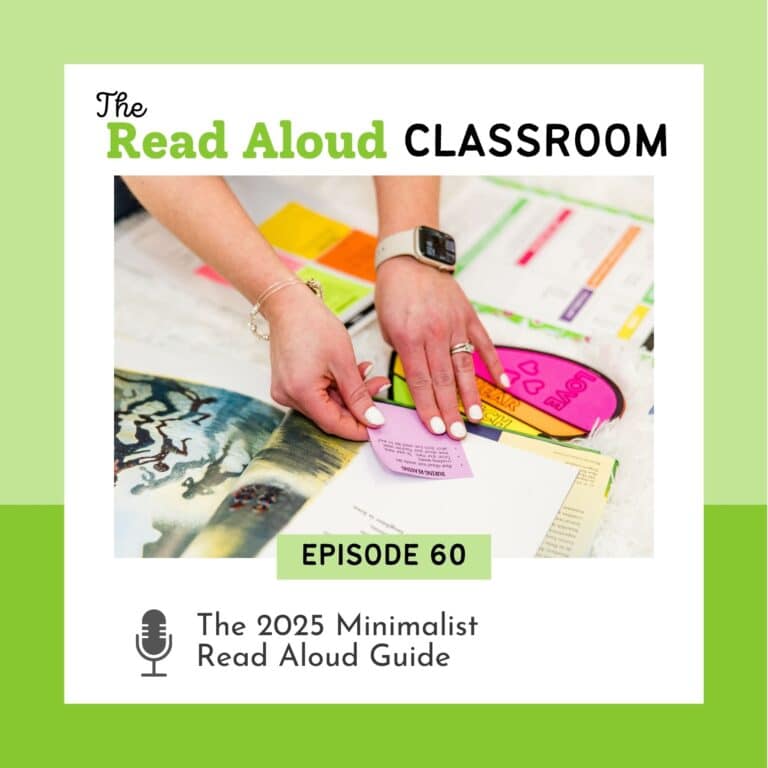
My favorite simple system is to put a checklist sticker inside the cover of each book. I list all the potential teaching points: character traits, cause/effect, life cycles, pattern writing, etc. Then I just check off everything that book can teach. When I’m planning, I can just flip open the cover and instantly see all the possibilities!
I also keep a quick-reference chart in my lesson planning binder with subjects across the top and book titles down the side. I mark what each book can teach, and it saves me SO much time when planning.
If you’re digitally inclined, a simple spreadsheet works wonders. You can filter by subject or skill when you need a book for a specific lesson.
And don’t do this alone! Divide and conquer with your grade-level team. You analyze five books, your teammate analyzes five different ones, and suddenly you’ve doubled your resource bank without doubling the work!
Wrap-Up:
So here’s the bottom line, friend. When we make one amazing picture book do multiple jobs in our classroom, everybody wins. Your students get deeper understanding through multiple exposures. You save precious planning time and make your classroom budget stretch further. And most importantly, your students start seeing those natural connections between subjects – that reading, science, and social-emotional skills all work together, just like in real life.
Action Steps:
If you want to try this approach, start super simple:
- Pick just 3-5 books you already love and brainstorm multiple ways you could use each one
- Create a quick checklist inside the covers to track all their potential uses
- Try the three-read approach with just one book next week
- When your students inevitably say “We already read this!” respond with excitement about becoming experts
- Share your book analysis with a teaching friend to instantly double your resource bank
Closing:
If you found these ideas helpful, I’d absolutely love to hear from you! Take a screenshot of this episode, share it on Instagram, and tag me @thecolorfulapple.
And I’m so excited to tell you that next week, I’ll be unveiling something that’s going to completely transform how you implement read alouds across your curriculum. It’s a resource I’ve created specifically to address everything we’ve talked about today.
Until then, head to thecolorfulapple.com/multipurpose to download my free Cross-Curricular Connection Chart template for your favorite picture books.
Thanks so much for hanging out with me today in The Read Aloud Classroom. Remember, with the right approach, one amazing book can truly do the work of three!