Have you ever noticed how your students’ faces light up when they’re playing happily with friends, but then watched their world crumble when that same friend chooses to play with someone else? Friendship challenges are some of the most emotional moments in our elementary classrooms, and honestly, they can be tricky to navigate as teachers too.
That’s exactly why teaching friendship skills through interactive read alouds is so powerful. When students see characters facing the same struggles they experience every day, something magical happens. They realize they’re not alone in these big feelings, and suddenly they’re ready to talk about solutions.
Today, I’m thrilled to share how Signs of Friendship by Annie Silvestro creates the perfect opportunity to help your 1st and 2nd graders understand what real friendship looks like—including the messy, complicated parts.
Why Signs of Friendship Is Perfect for Teaching Friendship Skills
This beautifully illustrated story follows Sally and Sonya, two best friends who love spending time together and learning sign language. Everything feels perfect in their friendship world until Dev, a new neighbor who is deaf, moves in next door. When Sonya and Dev become friends and start communicating in sign language, Sally feels completely left out.
Here’s why this book resonates so deeply with elementary students: it tackles the real friendship challenges they face without sugarcoating the emotions. Sally doesn’t just feel a little bothered—she feels angry, jealous, and hurt. Your students will immediately recognize these feelings because they’ve experienced them too.
The story shows students that good friends can have disagreements and still remain friends. It demonstrates that we can have multiple close friendships without it diminishing any single relationship. Most importantly, it reveals how talking about our feelings—even when it’s uncomfortable—helps solve friendship problems.

Common Friendship Challenges This Book Addresses
As teachers, we see the same friendship struggles play out in our classrooms year after year. Signs of Friendship directly addresses several of these common challenges, making it an incredibly practical tool for teaching friendship skills.
Feeling Left Out When Friends Play With Others
Sally’s experience of watching her best friend connect with someone new mirrors what happens on playgrounds everywhere. Your students have felt that sinking feeling when their friend runs off to play with someone else. This story validates those emotions while showing that having multiple friends actually enriches our lives rather than threatening our existing friendships.
Managing Jealousy and Anger
When Sally gets so upset that she yells at her friend, your students will recognize that moment of losing control when big feelings take over. The story doesn’t pretend these emotions don’t exist—it shows them honestly and then demonstrates healthy ways to work through them. This gives your students permission to acknowledge their difficult feelings while learning better responses.
The Power of Communication
The beautiful parallel in this story is that while the characters are learning sign language to communicate with Dev, Sally and Sonya also need to learn how to communicate their feelings to each other. This creates natural opportunities to discuss how talking about problems strengthens friendships rather than damaging them.
Including Others Who Feel Different
Dev’s experience as a deaf child learning to connect with hearing friends opens conversations about inclusion and accepting differences. Your students will discover that friendship isn’t about everyone being the same—it’s about welcoming others and finding ways to connect despite our differences.
Creating Meaningful Discussions During Your Interactive Read Aloud
The magic of teaching friendship skills through this book happens in the discussions you facilitate while reading. When you pause at strategic moments to ask thoughtful questions, students process the story on a deeper level and connect it to their own experiences.
Picture this: you’re reading about Sally watching Sonya and Dev laughing together, clearly developing their own friendship. You pause and ask, “How do you think Sally is feeling right now? What clues tell us this?” Suddenly, hands shoot up around the room. Students eagerly share about times they felt left out, and you can see the relief on their faces when they realize their classmates have experienced the same thing.
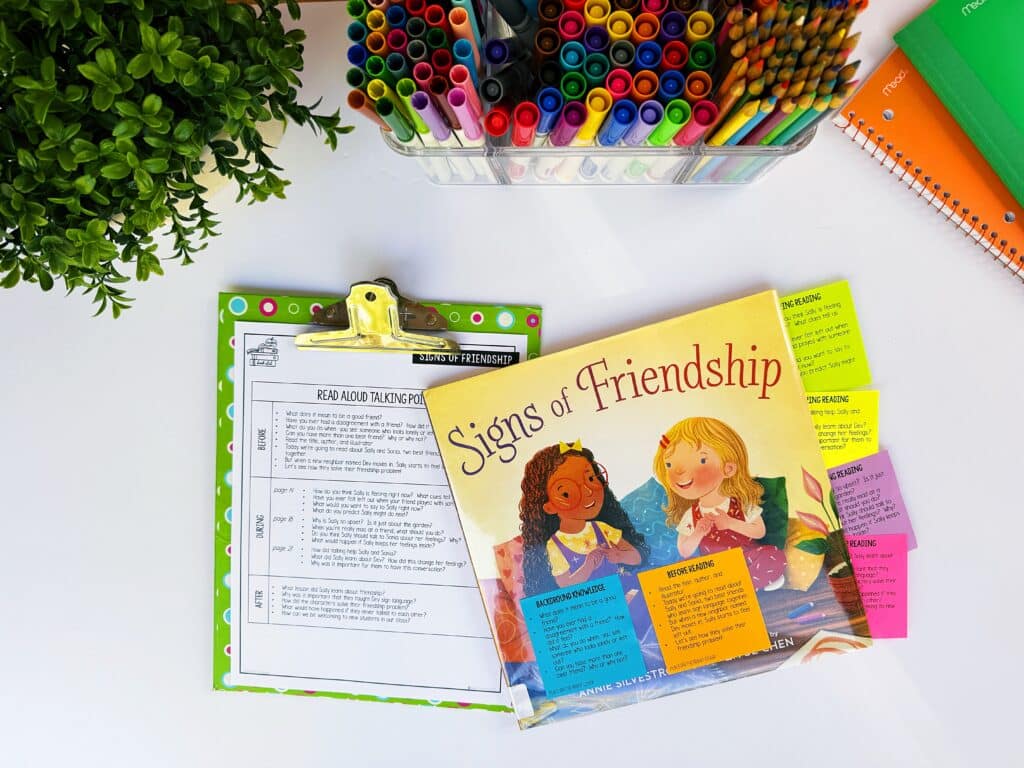
Later in the story, when Sally’s anger boils over and she lashes out at Sonya, you stop again to ask, “When you’re really mad at a friend, what should you do?” This question invites students to problem-solve together and share strategies. Some will admit they’ve yelled at friends too, while others will offer ideas about taking deep breaths or walking away until they calm down. These conversations build your classroom community while teaching practical friendship skills.
The beauty of an interactive read aloud is that you’re not lecturing students about how to be good friends—you’re guiding them to discover these lessons themselves through the characters’ experiences.
Signs of Friendship Activities That Extend the Learning
Reading the book creates the foundation, but the real transformation happens when students apply what they learned to their own friendships. That’s where purposeful follow-up activities make all the difference.
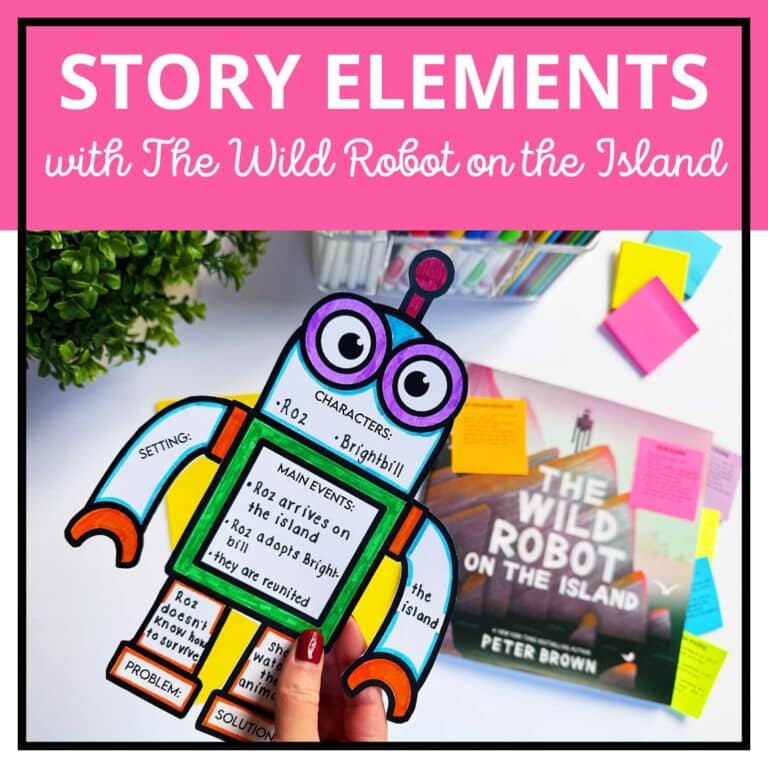
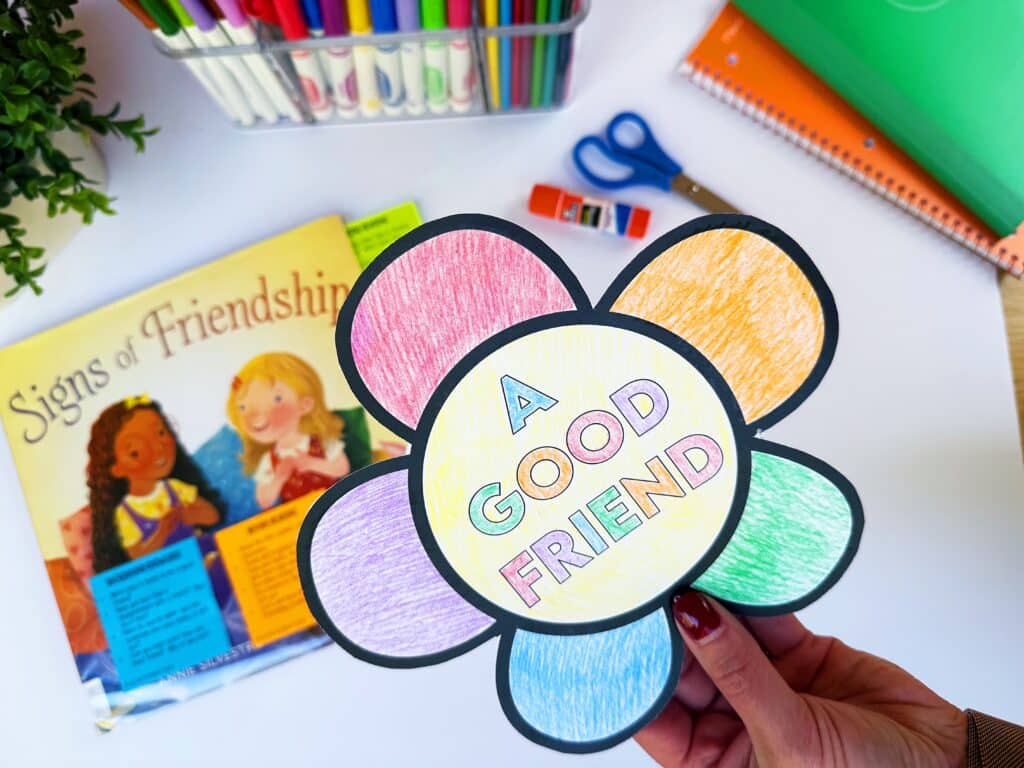
After finishing the story, students need opportunities to process the friendship lessons and practice the skills. Creating a class chart about qualities of good friends helps students articulate what they’ve learned. When they brainstorm words like “kind,” “includes others,” “talks about problems,” and “forgives,” they’re building a shared understanding of what friendship looks like in your classroom.
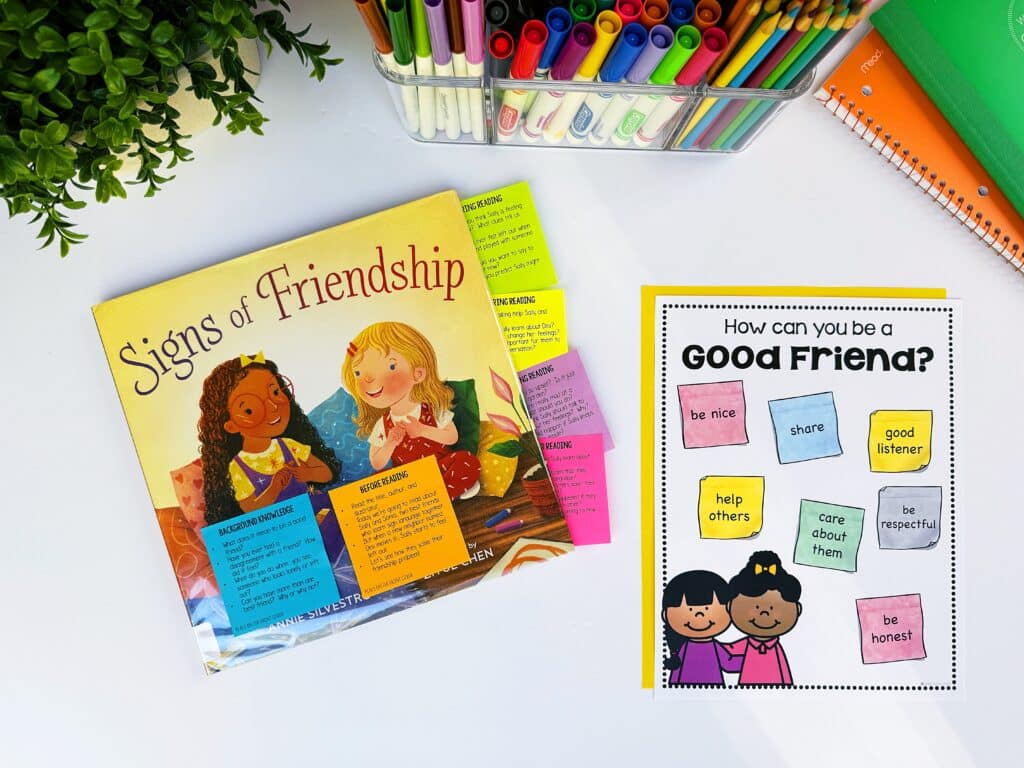
Friendship scenario activities give students a safe space to practice problem-solving before they’re in the heat of an actual conflict. When you present situations like “Your friend wants to play a different game than you do” or “You see a new student sitting alone at lunch,” students can think through solutions without the pressure of real emotions. These practice moments build their confidence for handling actual friendship challenges.
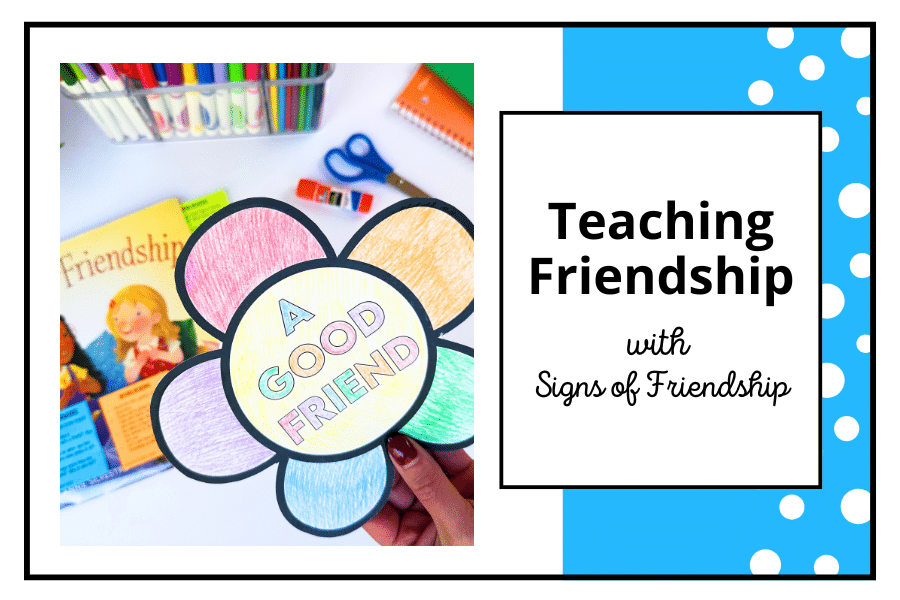
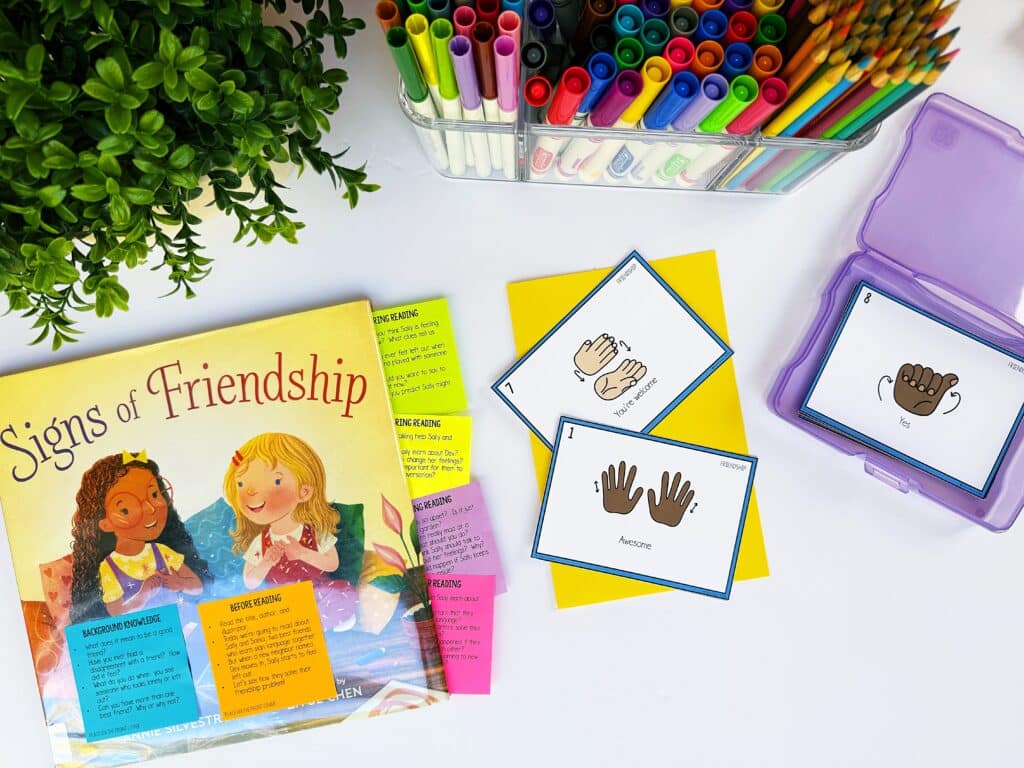
One of the most engaging extensions is teaching students basic sign language connected to the story. Learning to sign words like “friend,” “hello,” “thank you,” and “play” creates a tangible connection to the book while celebrating the unique way Dev communicates. Your students will love having this special skill, and it reinforces the story’s message about finding ways to connect with all kinds of friends.
Why This Interactive Read Aloud Works in Real Classrooms
Let’s be honest about what teaching looks like in today’s classrooms. You’re balancing a million demands, your schedule is packed, and finding time to address social-emotional learning can feel impossible. That’s exactly why having ready-to-use Signs of Friendship activities is so valuable.
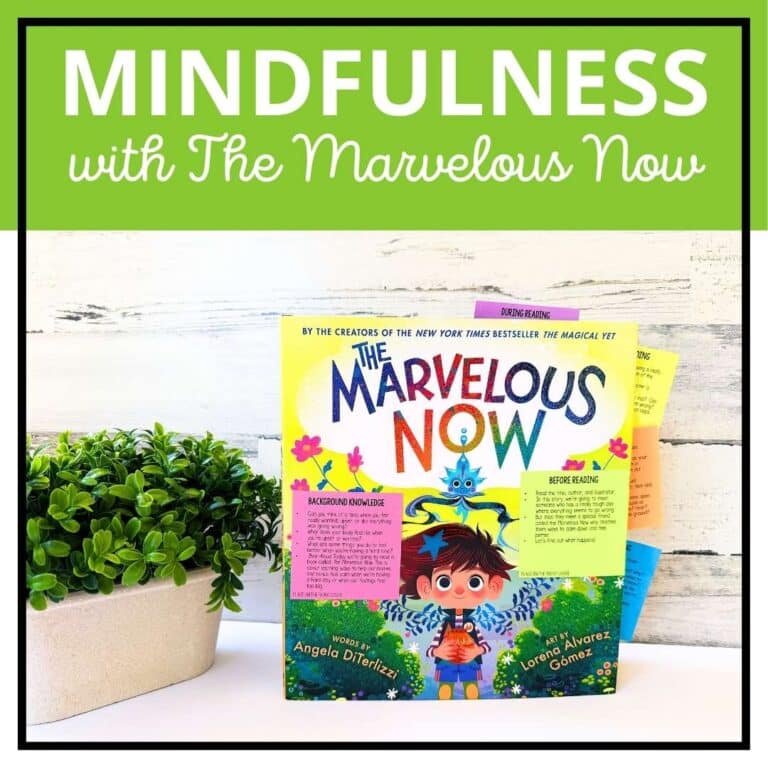
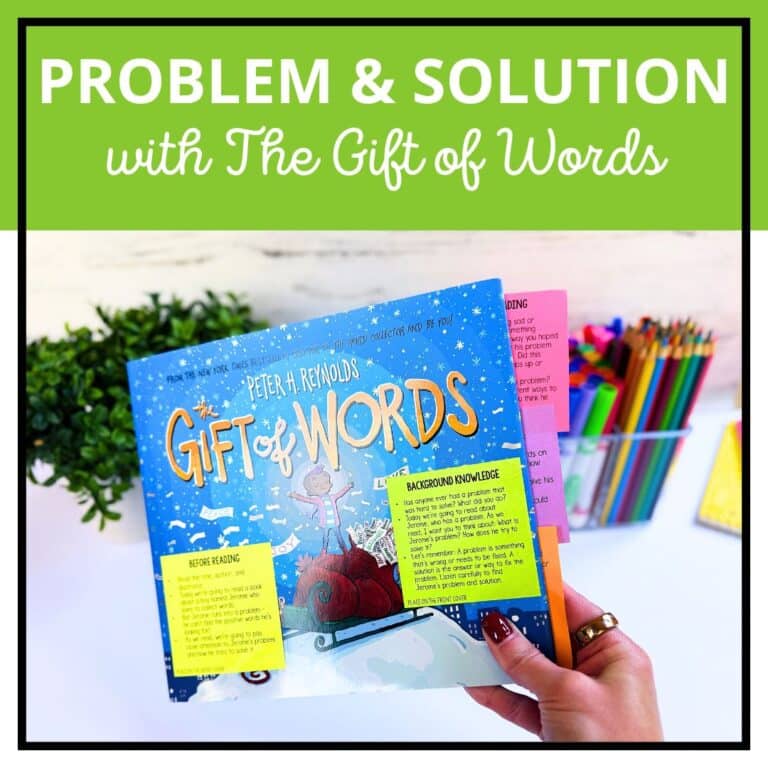
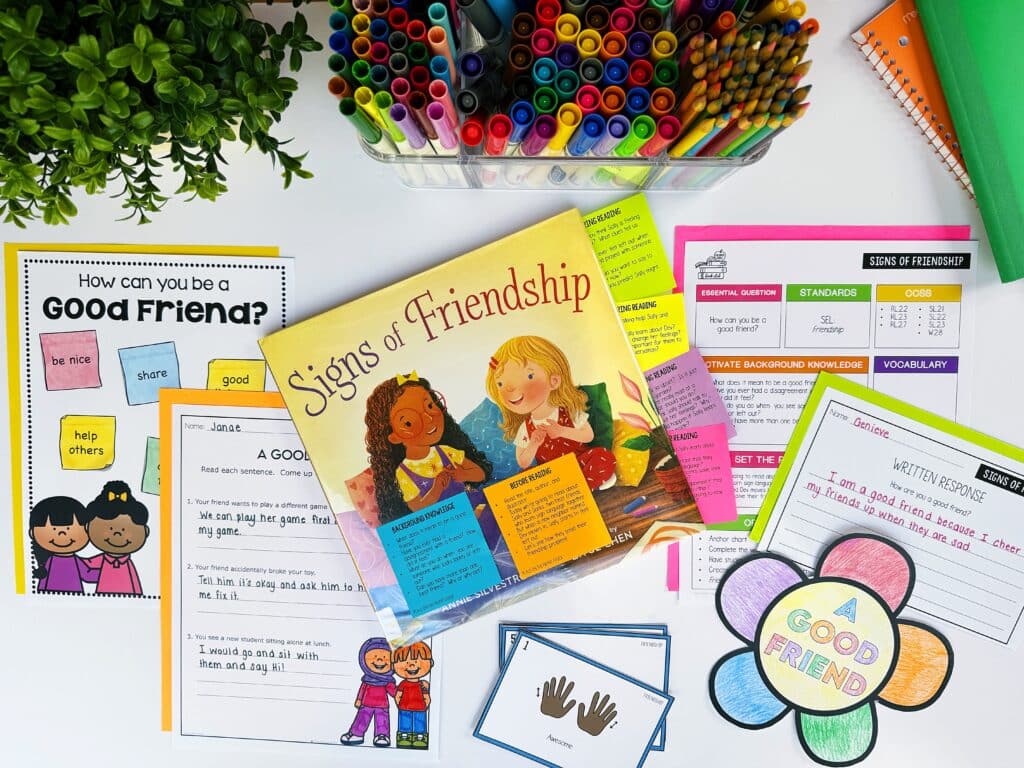
This interactive read aloud approach doesn’t require hours of preparation or complicated materials. The discussion questions are already written with specific page numbers, so you know exactly when to pause. The activities are designed to be meaningful without being overwhelming. Everything works together to create a cohesive lesson that addresses crucial friendship skills while fitting into your busy day.
Your students need these lessons because friendship challenges don’t wait for convenient teaching moments. They happen every single day—on the playground, in the cafeteria, during partner work, and in the hallway. When you’ve already taught these skills through Signs of Friendship, you have a shared reference point. You can remind students, “Remember how Sally felt left out? Is that what’s happening here?” or “What did Sally and Sonya do to solve their problem? Could that work for you too?”
Teaching friendship skills through interactive read alouds creates a common language in your classroom for navigating relationships. Students learn that friendship problems are normal, solvable, and something everyone experiences. This understanding builds empathy, resilience, and the communication skills they’ll need throughout their lives.
Transform Your Friendship Lessons with Ready-Made Resources
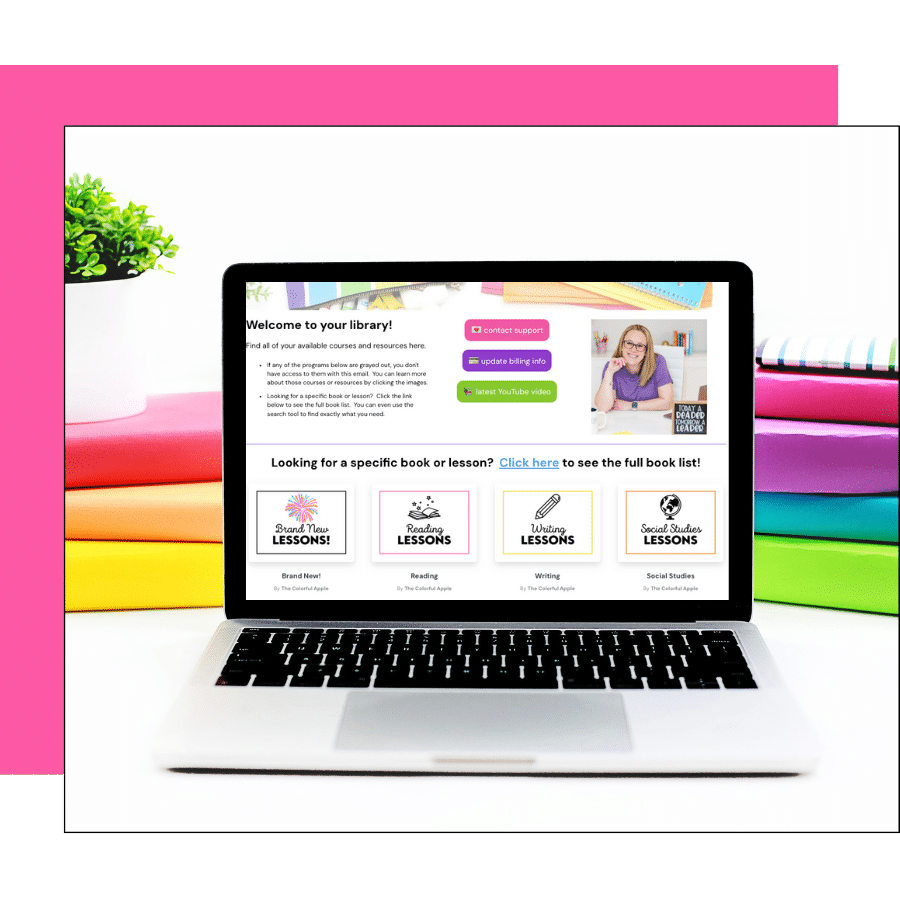
If you’re thinking, “This sounds amazing, but I don’t have time to create all these materials,” I have great news for you. I’ve already done the planning, question writing, and activity creating so you can simply print and teach.
The complete Signs of Friendship interactive read aloud lesson is available right now inside The Colorful Apple Book Club membership! When you join the Book Club, you’ll get instant access to this lesson plus dozens of other ready-to-teach interactive read alouds that help you integrate meaningful SEL skills and literacy instruction without sacrificing your evenings and weekends.
Book Club members receive new lessons monthly, along with seasonal activities, implementation videos, and a supportive community of teachers who understand the reality of your classroom. It’s like having a teaching partner who’s always prepared with exactly what you need for tomorrow’s lesson.
You can also find this lesson on my Teachers Pay Teachers store if you’d prefer to purchase it individually. Either way, you’ll have everything you need to facilitate powerful discussions about friendship while your students connect deeply with this beautiful story.
Your students deserve to learn that friendship challenges are normal and solvable. They need to know that talking about feelings strengthens relationships rather than damaging them. And you deserve resources that make teaching these essential skills simple and effective.
Let’s help our students build the friendship skills they’ll carry with them for life—starting with Sally, Sonya, Dev, and one very important conversation about what it really means to be a friend.